







Preparing for the appionment

Perhaps you forgot to mention that your knee wakes you at night. Or you talked about the pain, but never got round to explaining that your main concern is being able to walk the dog, get through work or return to a sport you enjoy.
It can be difficult to fit everything into one conversation. A little preparation can help you explain what has been happening, understand your options and leave knowing what comes next.
Our free joint pain consultation checklist, available at the bottom of this page, gives you a simple starting point.
Start with how your joint pain affects you
You do not need medical language to explain your symptoms. Describe what you notice and how it affects your day.
Before your appointment, jot down:
- Where you feel the pain and how long it has been there.
- Whether it started gradually or after an injury.
- When it feels worse and what seems to help.
- Any stiffness, swelling or changes in movement.
- Whether it affects your sleep, work, exercise or everyday activities.
- What you have already tried and whether it helped.
- Try to be specific. “I struggle to get downstairs in the morning” tells your clinician more about your experience than “my knee is bad”.
If your symptoms vary, explain that too. How you feel on the day of your appointment may not reflect the whole picture.
Tell your clinician what matters most to you
Pain is part of the conversation. What you want to get back to matters as well.
Perhaps your priority is sleeping more comfortably, keeping up with your children or enjoying a walk without planning every stop. You might want to stay in the gym, return to cycling or feel more confident on the stairs.
Ask yourself: What would I most like to be able to do more comfortably?
Share that goal early in the appointment. It gives you and your clinician something practical to discuss when considering treatment and reviewing progress.
Ask what could be causing the problem
You may already have a diagnosis, or this might be your first conversation about your joint pain.
Useful questions include:
- What could be causing my symptoms?
- Could this be osteoarthritis, an injury or something else?
- Do I need any tests or scans, and what would they help us understand?
- Are there any changes in my symptoms I should tell you about?
- If an explanation is unclear, ask your clinician to put it another way. You should feel able to understand the conversation and take part in decisions.
Explore your treatment options
It is reasonable to ask about the different approaches available and how they might fit your circumstances.
Your checklist can help you open up that discussion:
- What can I do myself to help?
- What role could exercise or physiotherapy play?
- Is weight management relevant to my situation?
- Would a support or brace be useful?
- Could an injection be appropriate?
- Can different treatments be used together?
- What are the alternatives?
You do not need to arrive knowing which treatment you want. The aim is to understand the options, what each involves and why your clinician might recommend one for you.
If an injection is discussed, ask for the details
“An injection” can mean different treatments. Ask which one is being suggested and why it is appropriate for your joint and symptoms.
Questions worth asking include:
- What is the injection called, and what does it contain?
- Why are you recommending it for me?
- What clinical evidence supports its use?
- What improvement is realistic, and over what timeframe?
- What are the risks and possible side effects?
- What will it cost, including any follow-up?
- What should I do before and after treatment?
If Cingal, Monovisc or Orthovisc is mentioned, ask your clinician to explain how the proposed treatment differs from the other options being considered.
Leave with a clear next step
Before the appointment ends, check that you understand the plan.
What should you do next? How should you approach activity? When will your progress be reviewed? Who should you contact if you are worried, and what happens if things do not improve?
Write down the agreed next step and any review date. You do not have to remember everything on the spot.
Download your free joint pain consultation checklist
Our one-page guide brings these questions together so you can keep them on your phone or print a copy to take to your appointment.
You do not need to ask every question. Choose the ones that matter to you, add your own and use the guide to help explain what you need.
Related guides
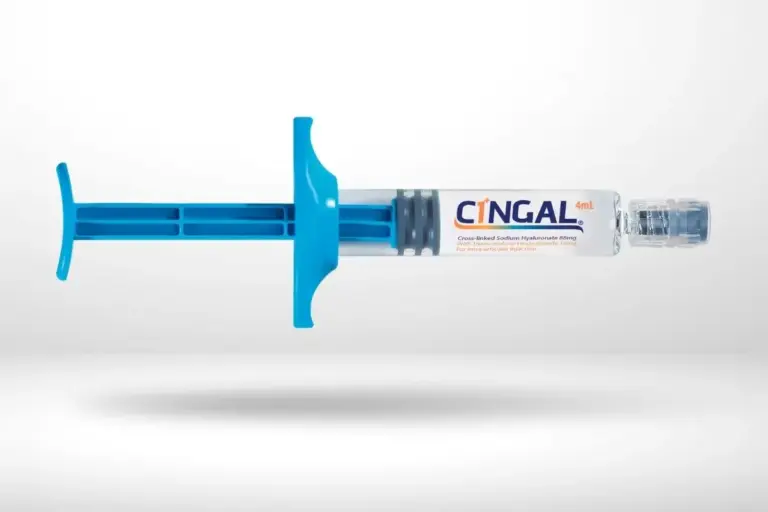
Cingal for joint pain
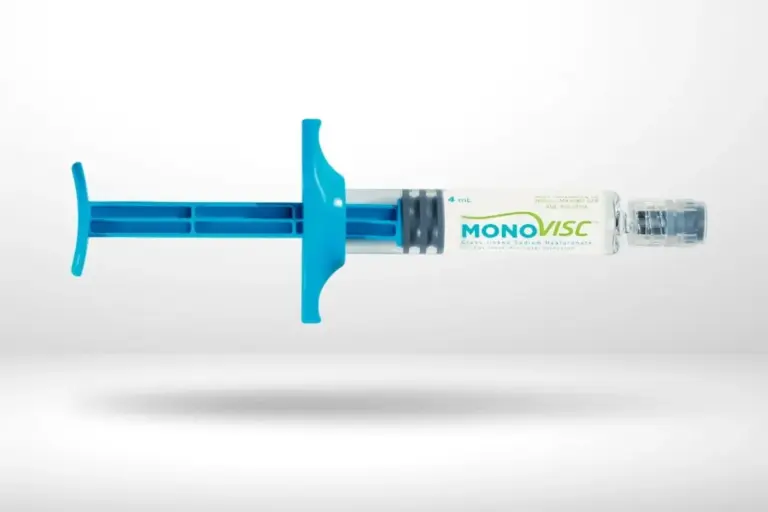
Monovisc for joint pain

Orthovisc for joint pain

Hyaluronic acid

Joint injections

Compression support

Cryo compression therapy
More from the community
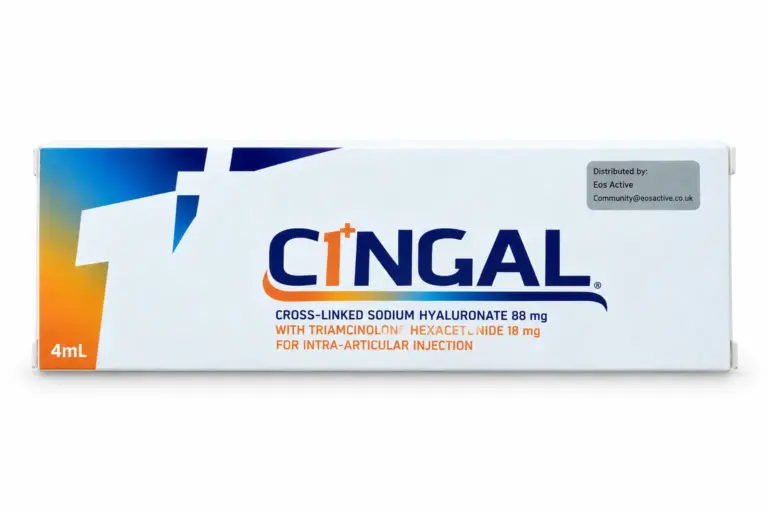
Joint injections and parallel imports | Before a joint injection, you will probably ask what it does, how long it might last and what to expect afterwards.

Steroid, hyaluronic acid, Cingal or Arthrosamid? Understand the differences between joint injections for arthritis, when they may be considered, and where compression and bracing could fit into your plan.

Steroid vs. Hyaluronic Acid and Why Cingal is a Game-Changer for Dr Mehrdad Bordbar

A practical guide to treatment options, support tools and everyday strategies
Useful downloads
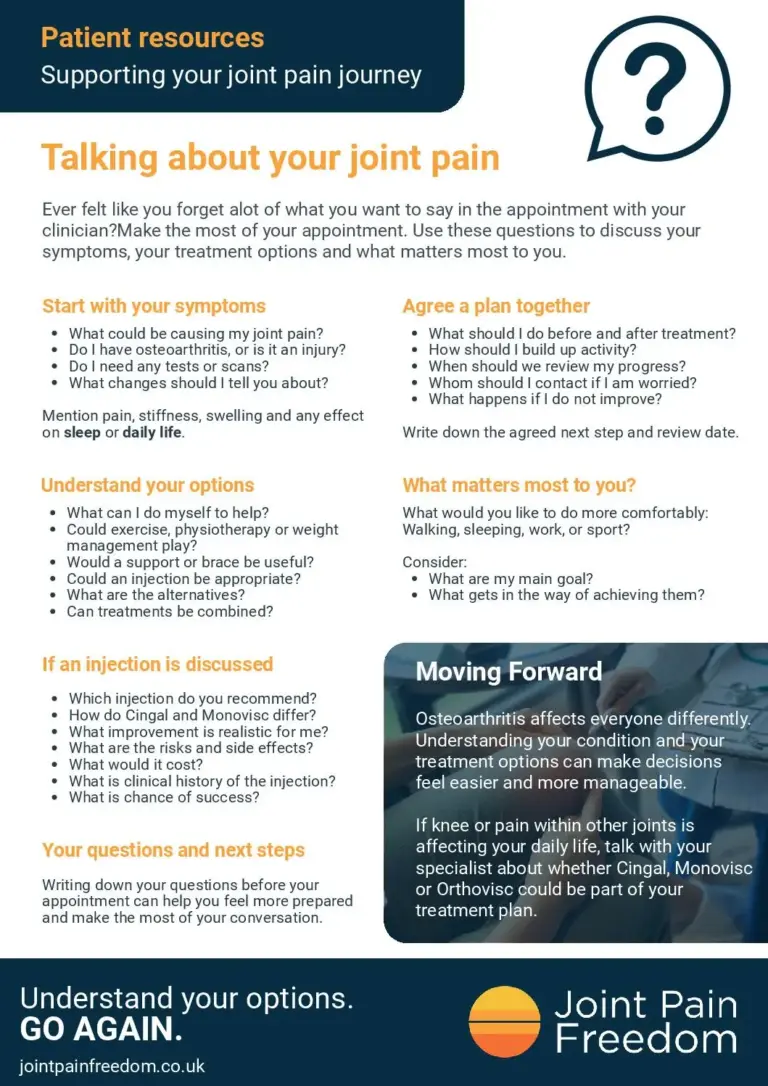
Talking about your joint pain
Questions to take to your appointment, covering your symptoms, your treatment options and what matters most to you.
Open the PDF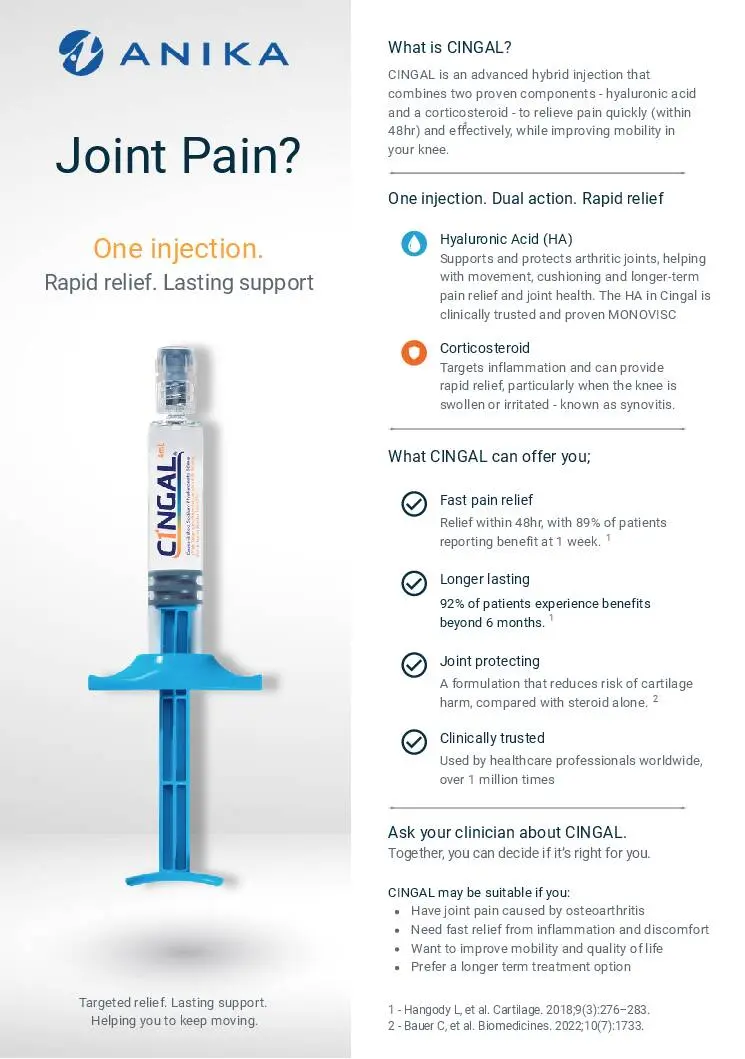
Cingal Overview Guide
Manufactured by world leader in joint care treatments, Anika. Learn more about breakthrough injection Cingal
Open the PDF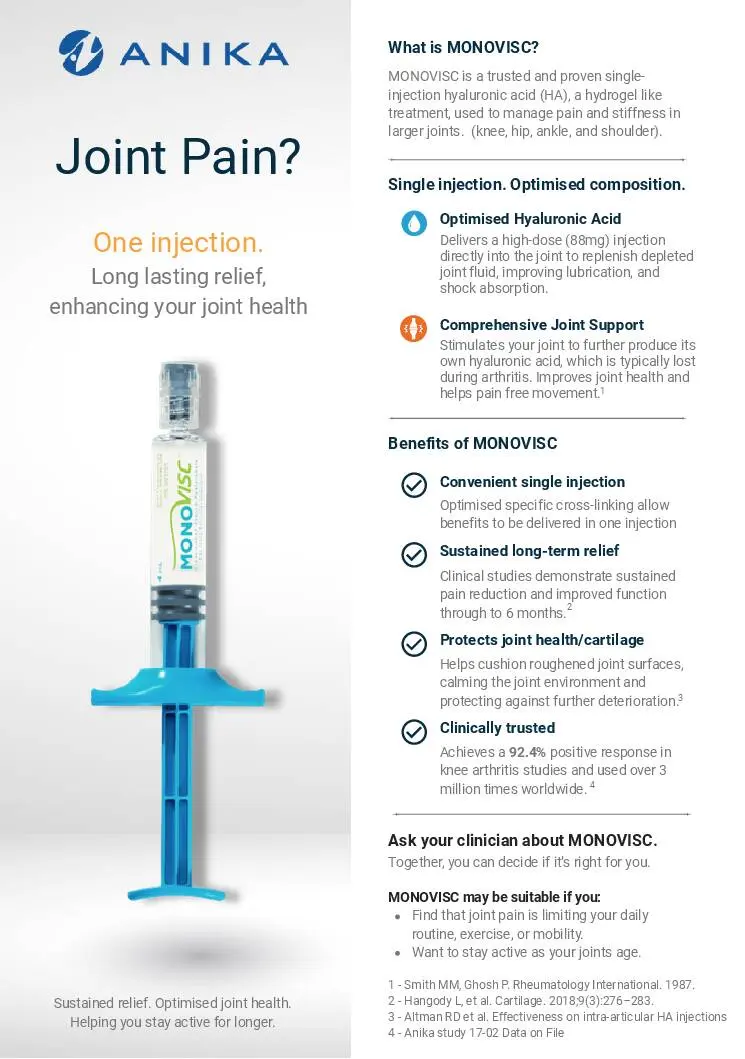
Monovisc Overview Guide
Manufactured by world leaders in joint care treatments, Anika. Monovisc has been trusted for joint pain treatment over 3 million times worldwide.
Open the PDF