
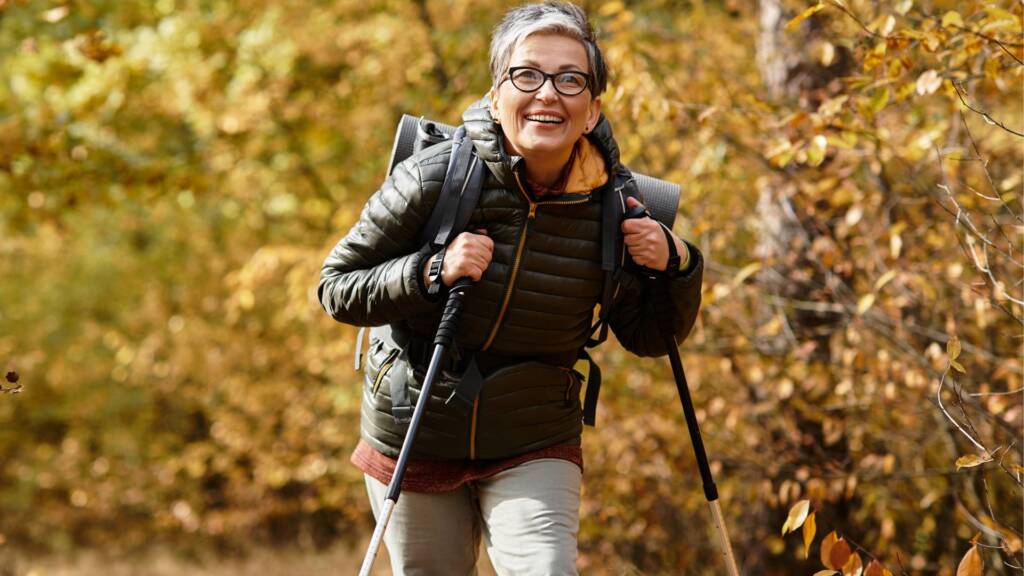




Walking and hiking with joint pain
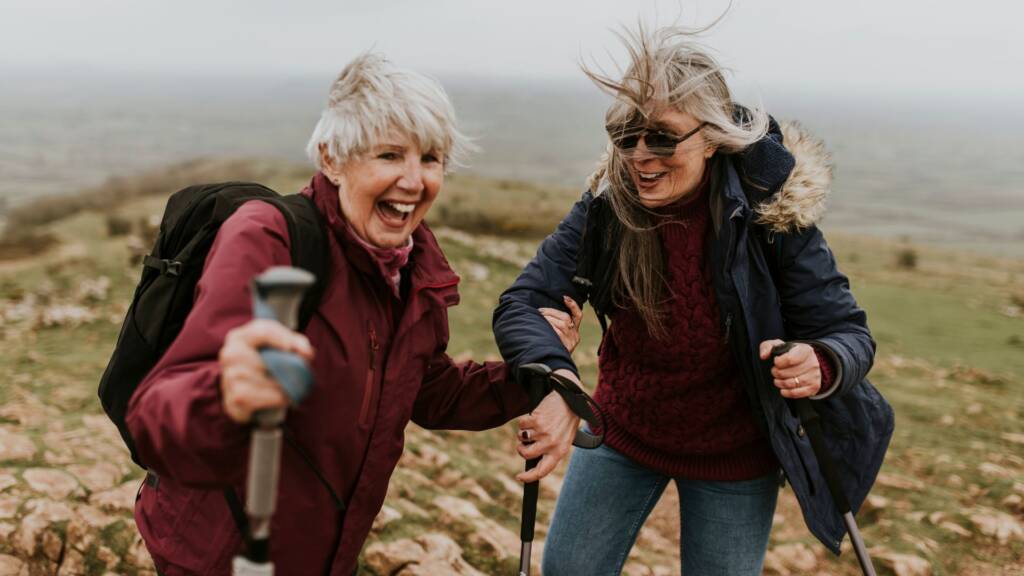
What walking asks of your joints
Where walkers usually feel it
Almost all of it comes down to descents, distance and load. Uphill is rarely the problem.
Knee
Hip
Ankle and foot
Lower back
Before you set off
Most walks begin cold, at the car park, often with the steepest section first.
Questions about walking and hiking and joint pain
The questions that come up when the hills start costing more than they used to.
Why does downhill hurt more than uphill?
Going down, the muscles work while lengthening to control the descent, and the joint takes a higher peak load with every step. Uphill is harder on the lungs; downhill is harder on the knee.
Do walking poles actually help?
Yes, and more than most people expect. They take a meaningful share of the load off the knees on descents and improve balance on uneven ground. They are the first thing worth trying.
Should I walk through the pain?
Mild discomfort that settles is fine and movement is good for the joint. Pain that increases as you go, or that leaves the joint worse the next day, means the distance or the terrain was too much for now.
How heavy is too heavy for a day pack?
There is no single number, but most people carry more than they need. If the pack is changing your posture or you are shifting it constantly, it is too heavy for your joints that day.
Is a knee brace worth it for hiking?
Many people find a brace helps on long descents, both for the support and for the confidence on uneven ground. It works best alongside the leg strength that keeps the knee stable in the first place.
What helps: movement, support and the right treatment at the right time
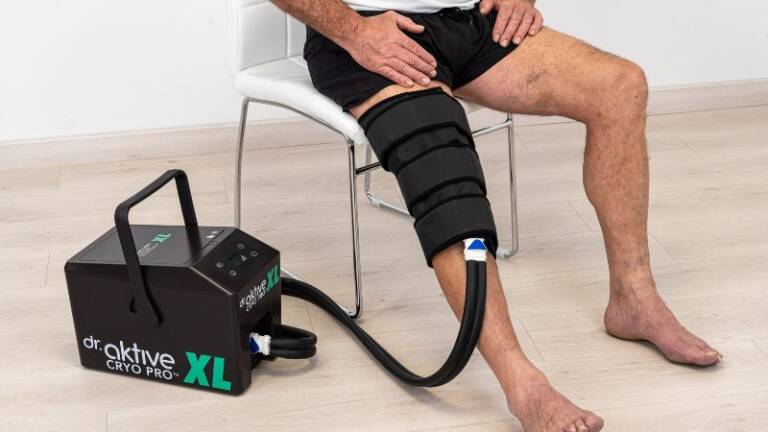
Cryo compression therapy
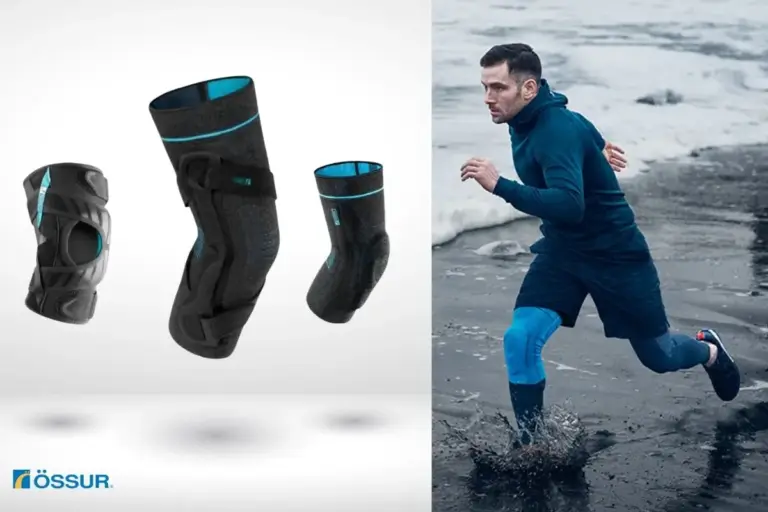
Compression support

Orthovisc for joint pain
Supports for walkers
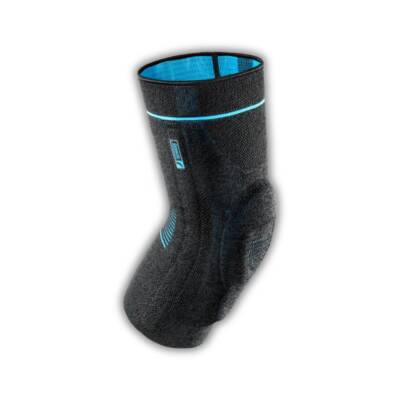
Össur Formfit® Pro Knee
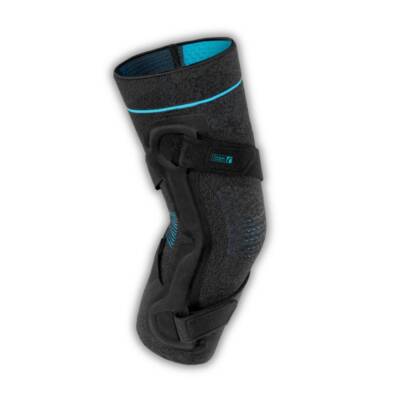
Ossur Formfit OA Knee
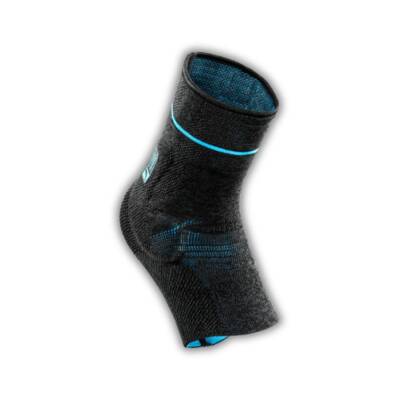
Össur Formfit® Pro Ankle
Conditions and treatments for these joints

Ankle Arthritis
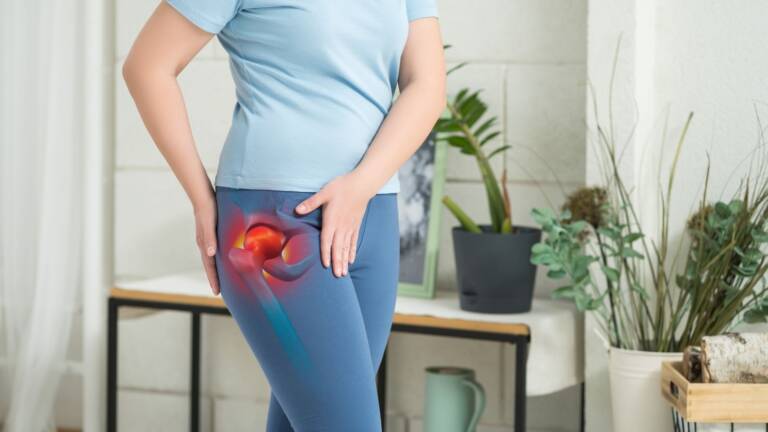
Hip Arthritis
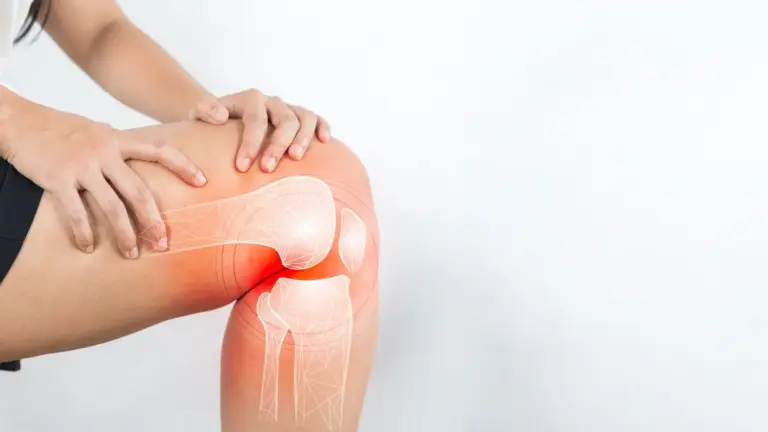
Knee Arthritis
Toe Arthritis
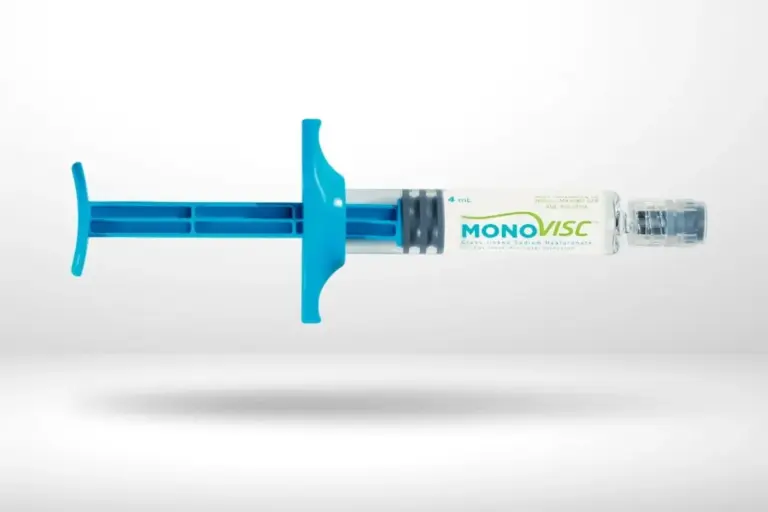
Monovisc for joint pain
Compression support
Related stories and articles
More on staying active with joint pain, and what other people have found helps.
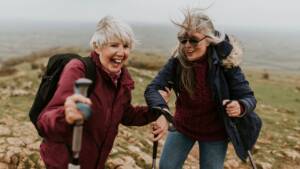
Hiking, be prepared!

Staying active with joint pain

The Osteoarthritis Treatment Journey