







Knee pain in cold weather: why it aches and what helps

You’ve sat through the first half of an outside event, maybe a sports event. At half-time, everyone heads for a tea, and you have to stand there a moment, waiting for your knee to straighten. Last week you barely thought about it. This week you’re wondering whether winter is going to be a long one.
Why can a damp day feel different?
A knee with osteoarthritis can be sensitive around its lining and the bone beneath the cartilage. One theory is that when the air pressure drops with a change in the weather, tissues around the joint expand a little. In a knee that’s already tender, you might notice that as a feeling of pressure or tightness. Researchers are still working out whether that actually explains the ache people feel.
Arthritis UK on cold weather and joint pain
If you’ve noticed a pattern, it’s reasonable to take it seriously. Pinning it all on the weather is harder. A 2023 review found links between weather conditions and osteoarthritis pain. A 2024 review that compared people’s weather exposure around painful episodes with other days found no consistent link with knee pain. Neither finding can tell you exactly why your knee hurt on Saturday. An ache on a wet afternoon, by itself, is no sign that the joint has deteriorated. 2023 weather review · 2024 weather review
It’s worth looking at what else changes when the nights draw in. Perhaps the dog still gets the long walk on Sunday, but the little walks during the week have quietly disappeared. Or you’ve spent an hour sitting still before asking a stiff knee to take a flight of steps. Try bending and straightening it a few times before you get up. On a grim day, a few short walks indoors are a way to keep moving. You can leave the heroic trip out in the rain to someone else.
Would a compression sleeve help?
A soft sleeve gives the knee a close-fitting layer that some people find warm and reassuring. Research on soft knee braces suggests they can ease pain and make movement easier for some people, although the studies have limitations. It’s hard to tell how much of any benefit comes from compression itself. Review of soft knee braces
If you try one, pick something you actually want to do in it. Wear it for the walk to the shops and see whether the steps down on the way back feel any easier. It should feel snug and still let you bend your knee comfortably. Take it off if you get tingling, numbness or more pain. If the knee regularly gives way, a physio can check what’s causing that and whether a different support would suit you. NICE reserves braces for particular circumstances, including instability or unusual loading when exercise alone is difficult or insufficient. NICE guidance on supports
When is it worth talking about an injection?
Think about what the pain has taken out of your week. If it keeps waking you, you’ve given up the dog walk or you’re too sore to do the exercises you’ve been given, that’s a good time for a review. You can book while the knee is relatively settled and talk through the last few weeks. Deciding about an injection starts with checking the cause of the pain and what you’ve already tried.
If the word steroid puts you off, say so. A corticosteroid injected into a joint aims to calm inflammation. NICE says it can be considered when other medicines are unsuitable or haven’t helped, or to help someone take part in exercise. When it helps, the relief is usually short-term, around two to ten weeks. If you have diabetes, ask about the temporary rise in blood sugar that can follow.
Monovisc is a steroid-free option you may hear about in a private knee clinic. It contains hyaluronic acid (HA), a substance found naturally in the fluid that lubricates your joint. A trial comparing one Monovisc injection with saline found that people receiving Monovisc were more likely to meet the study’s target for pain relief over 26 weeks. The Monovisc study measured pain relief and mobility, which is demonstrated benefit to patients with mild to moderate joint pain associated with arthritis.
If it’s the needle itself that worries you, tell the clinician before you get on the couch. Ask what it will feel like, whether numbing the area is an option and what to expect the next day. A joint can be sore afterwards, but tends to settle after 48hr. If it doesnt you must seek medical assistance urgently.
For the longer term, come back to the thing you miss. If that’s a Sunday walk with your partner, ask, “If this helps the pain, how shall I build back up to that walk? And if it doesn’t help, what do we try next?” You deserve an answer to both before you decide.
Take home
Joint pain can increase over the winter months. This is largely down to colder, damp conditions, but also keep in mind that movement is good for your joints, so it’s important to find strategies to help keep things moving. Compression sleeves, bracing and injections are all well-thought-out potential strategies.
Related guides


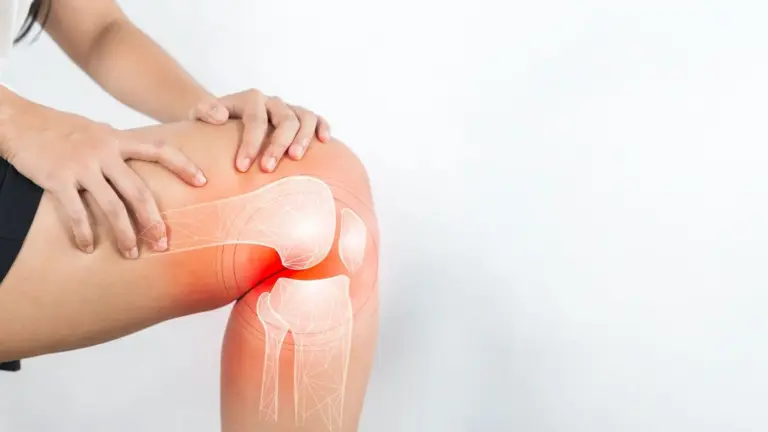
Knee Arthritis

Hip Arthritis
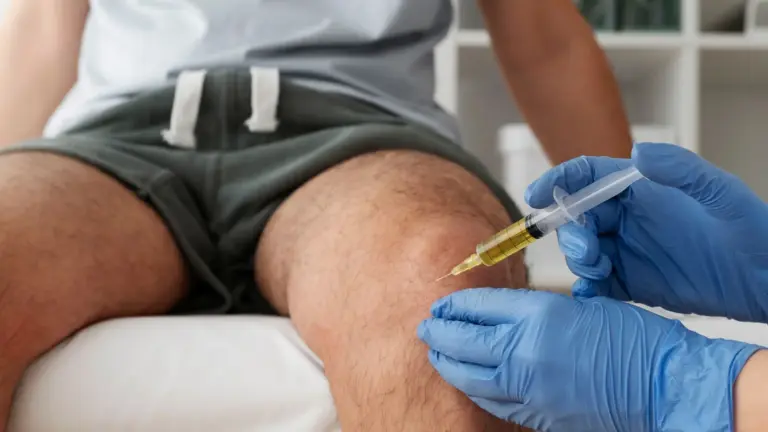
Joint injections
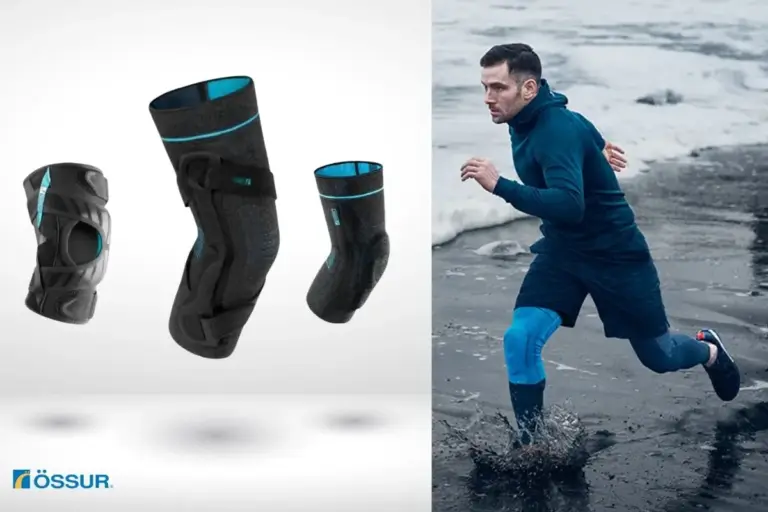
Compression support
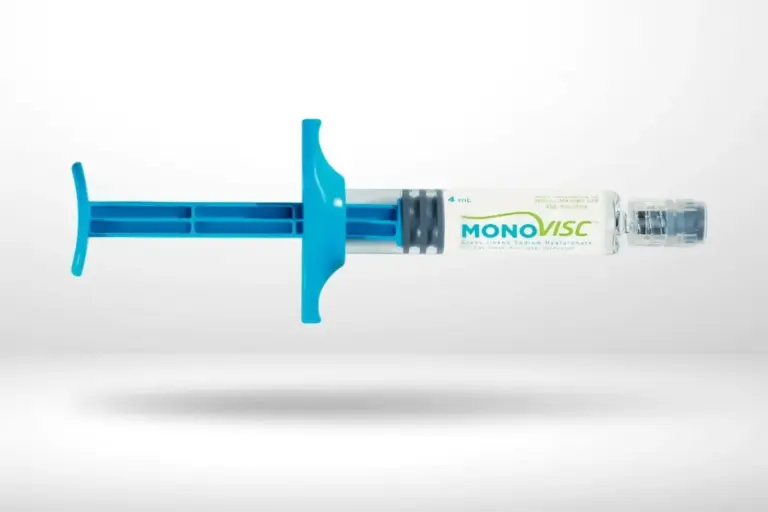
Monovisc for joint pain
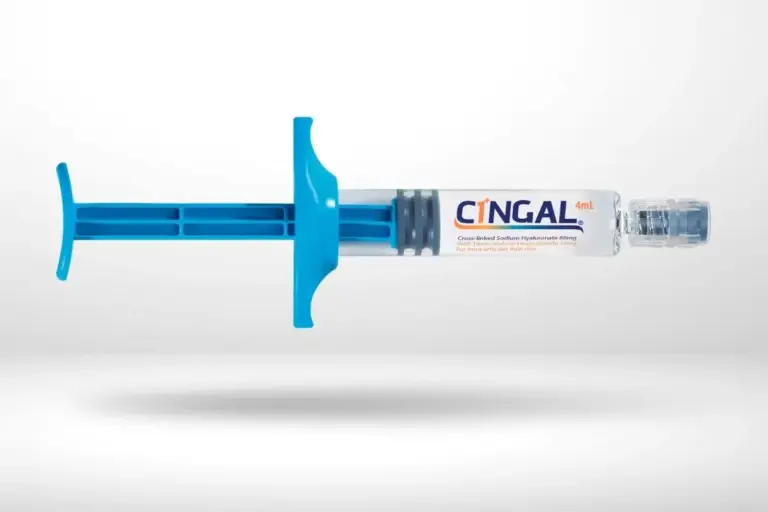
Cingal for joint pain
More from the community
How To Prepare For Hiking When You Have Knee Pain, Arthritis Or Joint Stiffness

Steroid, hyaluronic acid, Cingal or Arthrosamid? Understand the differences between joint injections for arthritis, when they may be considered, and where compression and bracing could fit into your plan.
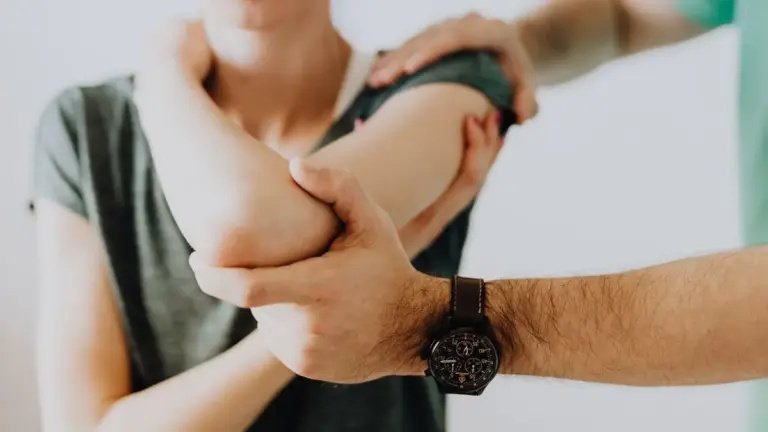

A practical guide to treatment options, support tools and everyday strategies
Useful downloads
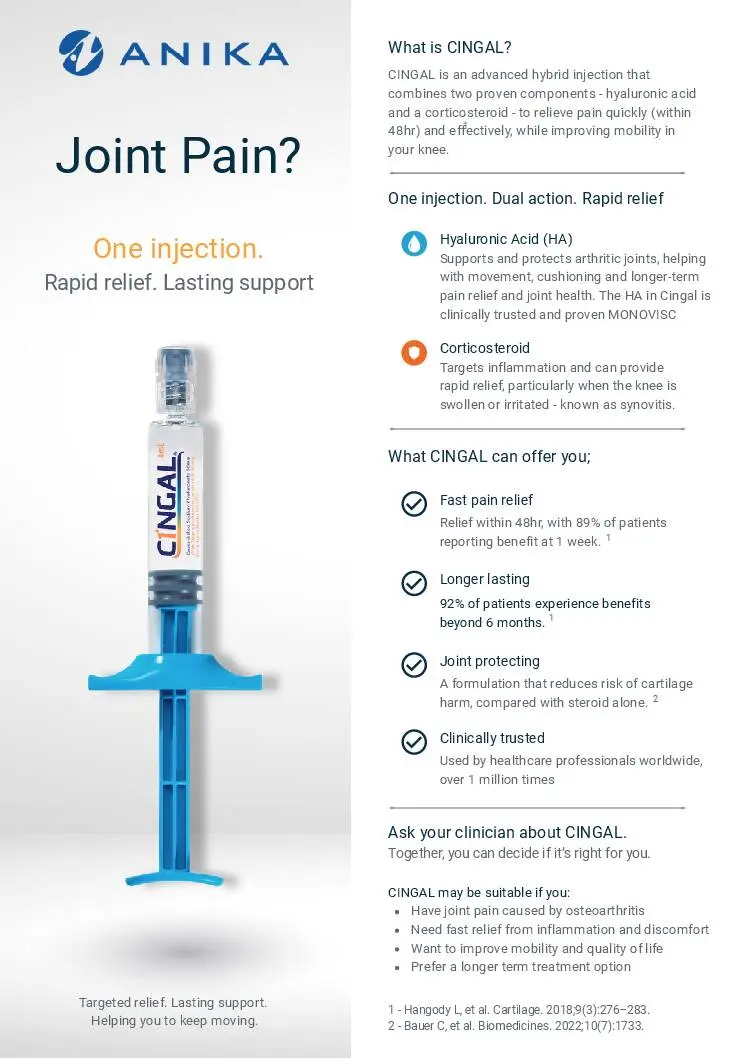
Cingal Overview Guide
Manufactured by world leader in joint care treatments, Anika. Learn more about breakthrough injection Cingal
Open the PDF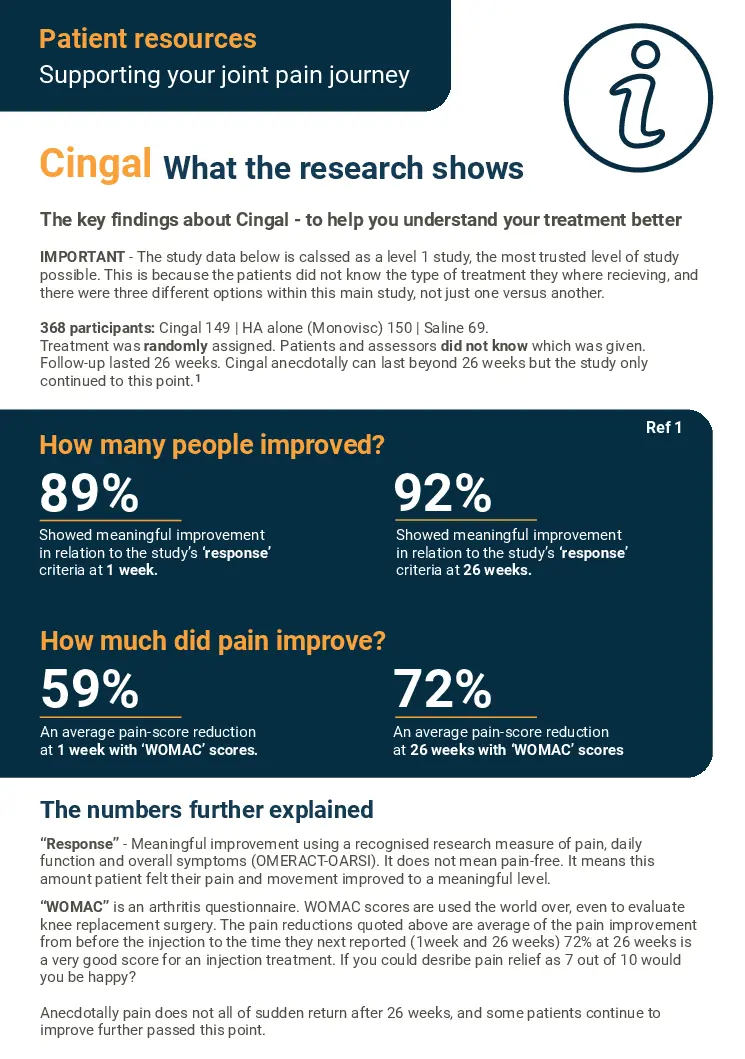
Cingal Study Data Information
Cingal study data for joint pain relief- easy to understand
Open the PDF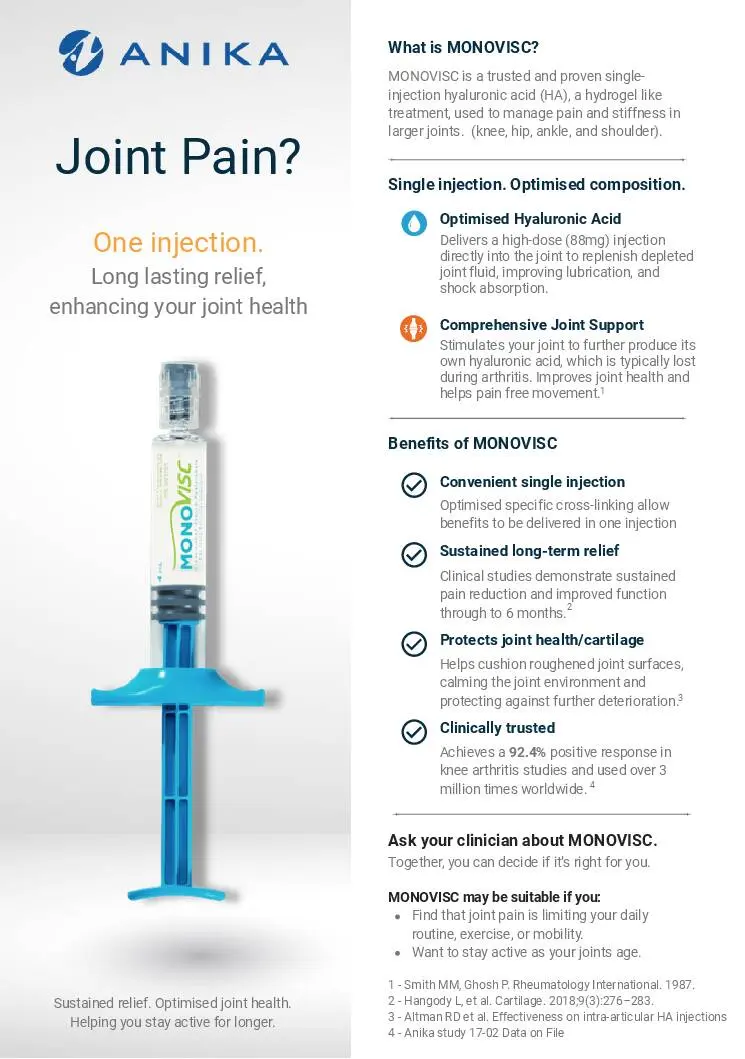
Monovisc Overview Guide
Manufactured by world leaders in joint care treatments, Anika. Monovisc has been trusted for joint pain treatment over 3 million times worldwide.
Open the PDF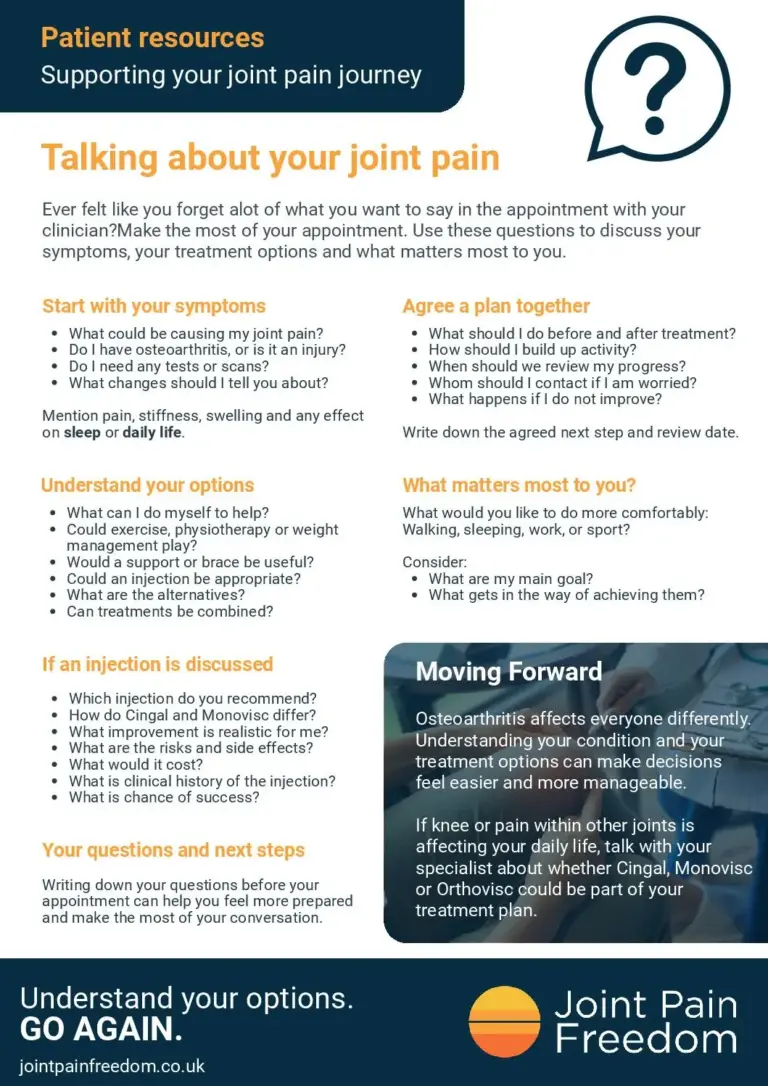
Talking about your joint pain
Questions to take to your appointment, covering your symptoms, your treatment options and what matters most to you.
Open the PDF