







GB Coach Cingal Experience
For Lauren Jackson, a GB strength and conditioning coach, that meant finding a way to train, demonstrate movements at work and get through everyday life without constantly worrying about her knee.
Following an assessment and treatment with Cingal, Lauren reported less pain and inflammation, greater confidence and a return to full training.
Her experience offers a useful starting point for understanding Cingal, the evidence behind it and where it might fit into your own treatment plan.
When your knee keeps holding you back
Lauren had undergone two ACL reconstructions and a further operation on the same knee.
She wanted to remain active, but attempts to return to her normal training were repeatedly followed by pain and inflammation. Previous joint injections had not given her enough improvement to get back comfortably to the activities that mattered to her.
The impact went beyond exercise. Her knee was affecting her work and leaving her uncertain about what she could comfortably do.
Lauren arranged an assessment with Ben Harper, who reviewed her symptoms, surgical history and goals. Together, they discussed Cingal as a possible next step.
What is Cingal?
Cingal is a single injection combining hyaluronic acid with a corticosteroid called triamcinolone hexacetonide.
The corticosteroid addresses inflammation and provides earlier symptom relief. Hyaluronic acid supports lubrication within the joint and longer-lasting symptom relief.
The aim is to reduce osteoarthritis symptoms and make movement more comfortable.
What changed for Lauren?
Lauren felt nervous before the injection. Having tried treatments before, she was understandably cautious about getting her hopes up.
She described the procedure as quick and virtually pain-free. Within the first week, she began noticing less inflammation at the end of the day and more comfortable movement in the gym.
She built her activity up gradually, paying attention to how her knee responded.
Three months later, Lauren reported that she had returned to full training. She felt more confident demonstrating movements at work and was no longer avoiding particular exercises because of her knee.
For her, the difference was being able to do more without constantly thinking about how her knee might react.
Watch the video at the top of this page to hear Lauren explain her experience in her own words.
What does the clinical evidence show?
Lauren’s story is one person’s experience. Clinical research helps us understand what treatment may offer across a larger group.
In a randomised, double-blind study involving 368 people with knee osteoarthritis, the Cingal treatment group achieved:
- A 92% responder rate at 26 weeks, using established clinical criteria for improvement.
- This is important, as with all treatments and injections, the normal rate of who respond to treatment is around 60% to 70%. 92% represents a very strong result.
- An average 72% reduction in knee pain at 26 weeks, compared with pain levels before treatment.
- This represents a pain reduction that is extremely meaningful, as a 100% improvement would never really be possible with any treatment type, but at this level, most patients are able to get back to the activities that they want to.
- These findings support Cingal as an evidence-backed option for knee OA symptom relief. Where could Cingal fit for you?
- You do not need to be an athlete to want more comfortable movement. Cingal is equally popular with patients like Lauren, master’s athletes and those who want to avoid surgery for longer.
Your goal might be walking the dog, managing the stairs, returning to the gym or getting through a working day with less pain.
If knee osteoarthritis is still limiting you despite the steps you have already taken, Cingal may be an option to discuss with a qualified clinician.
The study behind these figures included mild to moderate radiographic knee OA, classified as Kellgren–Lawrence grades I–III. If you have more advanced or severe OA, an individual assessment is especially important: these figures do not establish the same results for end-stage disease.
A useful discussion starts with:
- What is causing your pain?
- What have you tried, and how much has it helped?
- What would you most like to get back to?
- What improvement could reasonably be expected from an injection?
- Part of your wider plan
- For Lauren, feeling better allowed her to build back towards the activities she valued.
You can view some useful downloads at the bottom of this story; the ‘Talking about your Joint Pain’ sheet is very useful to help you prepare for any potential consultation.
A useful way to approach the conversation about treatment: what could better symptom control help you do?
Your clinician can explain how an injection might fit alongside your rehabilitation, strength work and other support, including the possible risks and alternatives.
Lauren’s experience was positive, but every patient is different. The next step is finding out what is appropriate for your joint, your symptoms and your goals.
Find out whether Cingal could be an option for you
At Joint Pain Freedom, you can learn more about Cingal, explore other treatment options and find a clinic to discuss your joint pain.
Related guides

Knee Arthritis
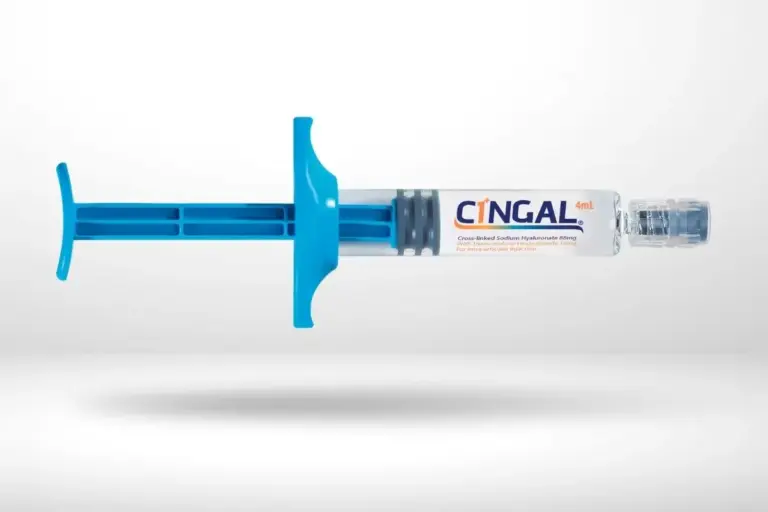
Cingal for joint pain
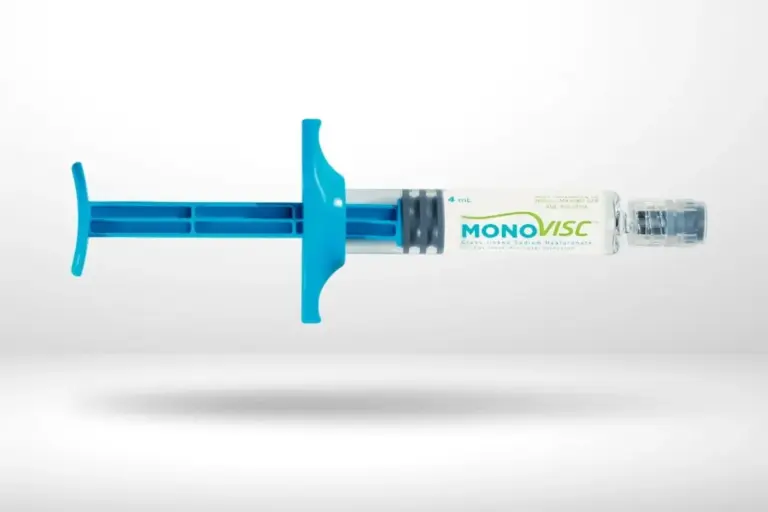
Monovisc for joint pain

Compression support
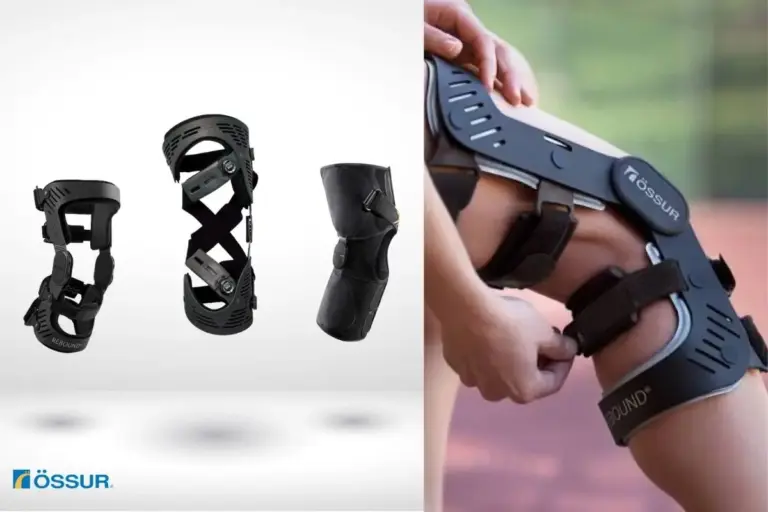
Bracing
More on the knee

Colin, 74 yr old from Glasgow tells his Cingal story


Steroid vs. Hyaluronic Acid and Why Cingal is a Game-Changer for Dr Mehrdad Bordbar

Learn how masters athletes can plan recovery, strength and gradual training blocks, with a practical three-month reset and research-backed advice.
Useful downloads
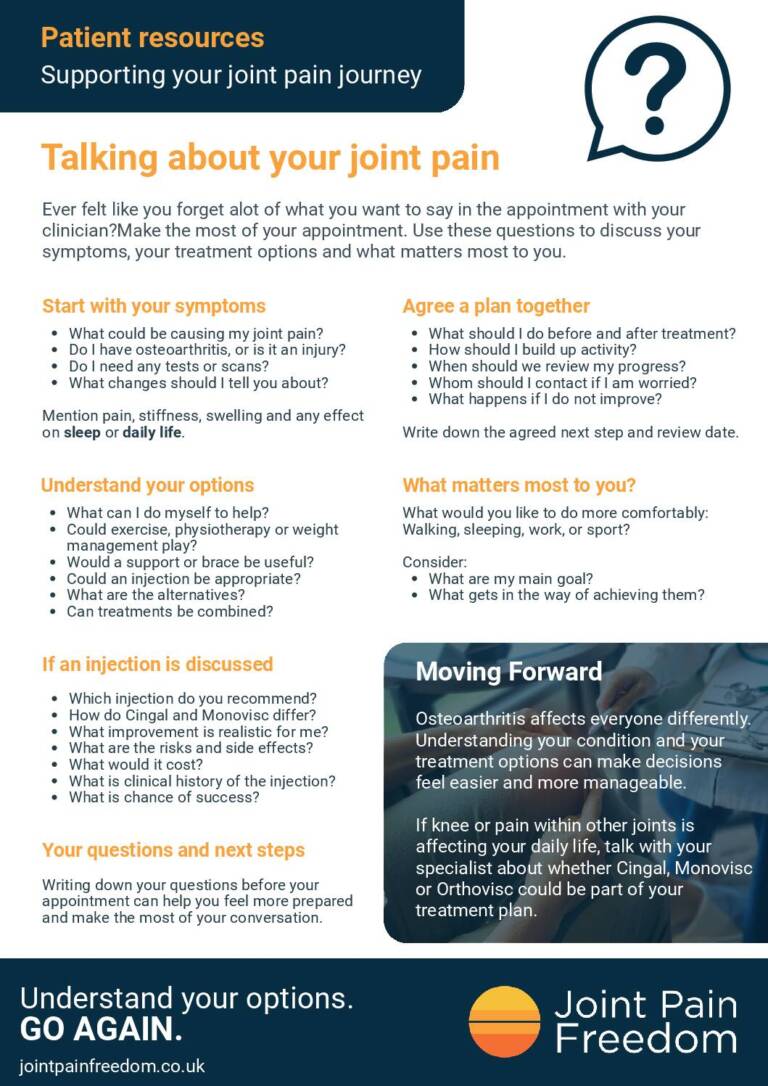
Talking about your joint pain
Questions to take to your appointment, covering your symptoms, your treatment options and what matters most to you.
Open the PDF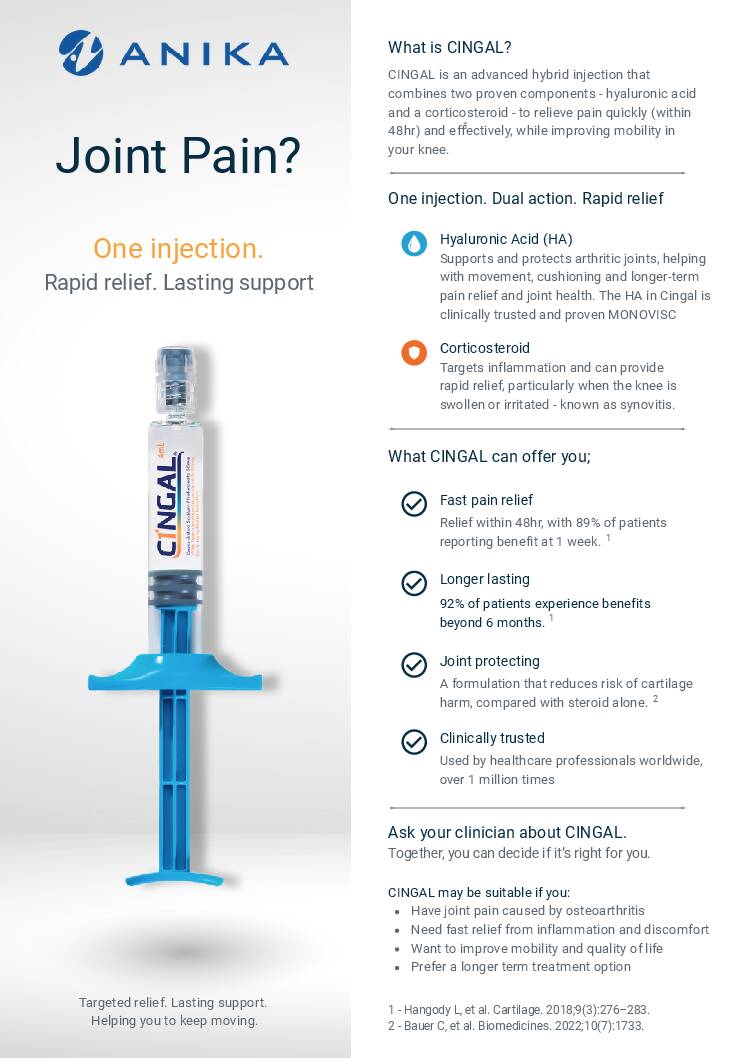
Cingal Overview Guide
Manufactured by world leader in joint care treatments, Anika. Learn more about breakthrough injection Cingal
Open the PDF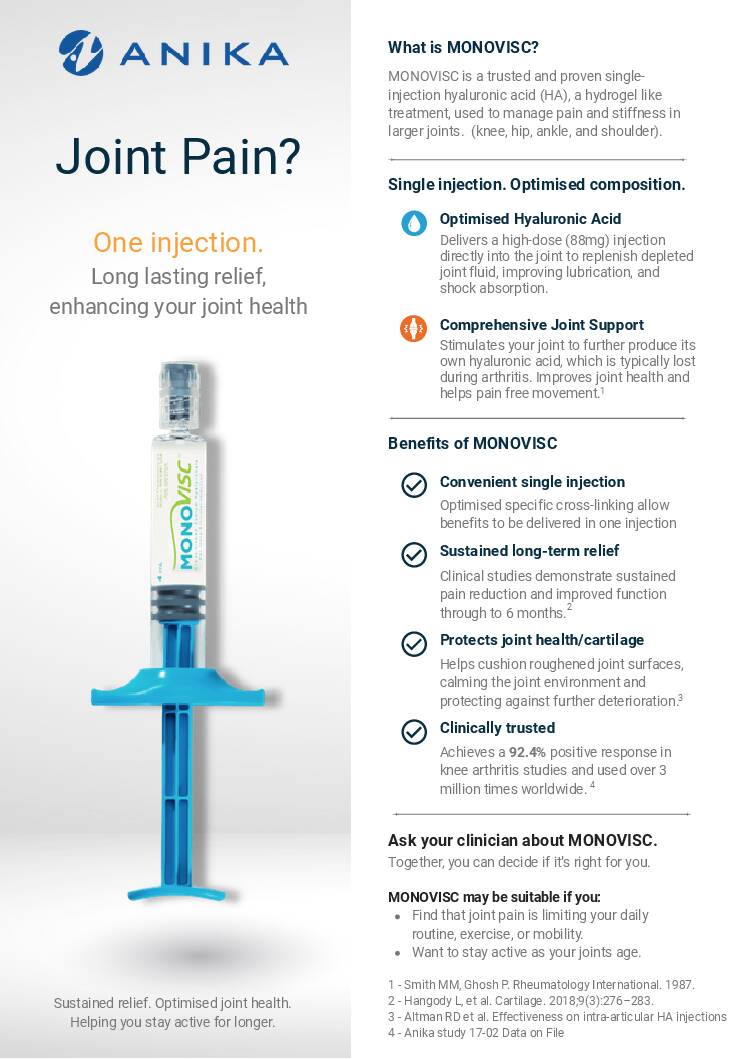
Monovisc Overview Guide
Manufactured by world leaders in joint care treatments, Anika. Monovisc has been trusted for joint pain treatment over 3 million times worldwide.
Open the PDF