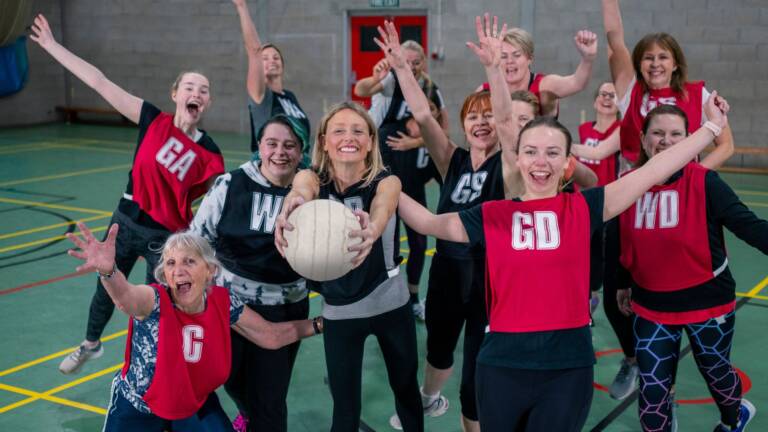







Masters Athletes: Periodisation and Recovery

Periodisation for masters athletes and why your season needs a reset
You can love competing and still need a part of the year when you stop chasing your best performance.
For masters athletes, periodisation means planning different phases of training across the season, including preparation, harder training, competition and recovery. It helps give each block a purpose and creates space to manage fatigue, rebuild capacity and prepare for the events that matter.
That becomes difficult when every month brings another competition, and every competition gets treated like the main event.
At some point, the season needs room for something else: easier movement, focused strength work, rehabilitation where needed, and a proper mental reset.
What is periodisation in training
Periodisation is the planned variation of training over time. You change how much you do, how hard you work and what you are trying to achieve.
A rest day helps you recover between sessions. An easier week reduces the demands of a training block. A seasonal recovery and rebuilding phase creates a longer opportunity to address what has been squeezed out by competition.
They serve different purposes. A few days off cannot always accommodate the work you have been putting off for months.
Why recovery deserves attention in masters athletes
Being a masters athlete does not mean you are fragile or should stop training hard. It does mean your plan should reflect your current fitness, injury history, recovery and life outside sport.
Research on recovery in masters athletes is more nuanced than simply saying that everyone recovers more slowly with age. A review by Borges and colleagues found limited evidence and considerable uncertainty, while emphasising the value of continued systematic training.[1]
One small study illustrates why performance alone may not tell the whole story. Fell and colleagues compared nine younger and nine veteran cyclists across three consecutive days of time trials. The veteran group reported worsening soreness, fatigue and recovery, despite maintaining performance.[2]
The practical implication: still hitting your numbers does not necessarily mean you feel ready for another hard session.
Stop treating every competition as your main event
A busy calendar can leave you repeatedly preparing, competing and recovering, with little uninterrupted time to build anything.
Try giving your events different jobs:
Priority events are the ones you plan to arrive at properly prepared and fresh.
Preparation events help you practise pacing, technique or competition routines.
Optional events can be missed when they interfere with recovery or the wider plan.
There is no universal rule that competing monthly is too much. A short local event and a long endurance race create very different demands. What matters is the total load, how you respond and whether the calendar leaves space to recover and develop.
The International Olympic Committee’s consensus on load and injury highlights the importance of managing training, competition and psychological demands together.[3]
Could a three-month reset and rebuild block help?
For an athlete coming out of a demanding season, a roughly three-month block away from peak competition demands can be a useful planning option.
There is no established evidence that all masters athletes need 12 weeks of very low intensity, or that this prevents injury. Think of this as a flexible recovery-to-rebuilding framework to discuss with your coach or physiotherapist.
The opening phase should feel meaningfully easier. The following weeks can gradually restore capacity while competition pressure stays low.
Month one gives recovery some space
Step away from maximal efforts and the expectation that every session must prove something.
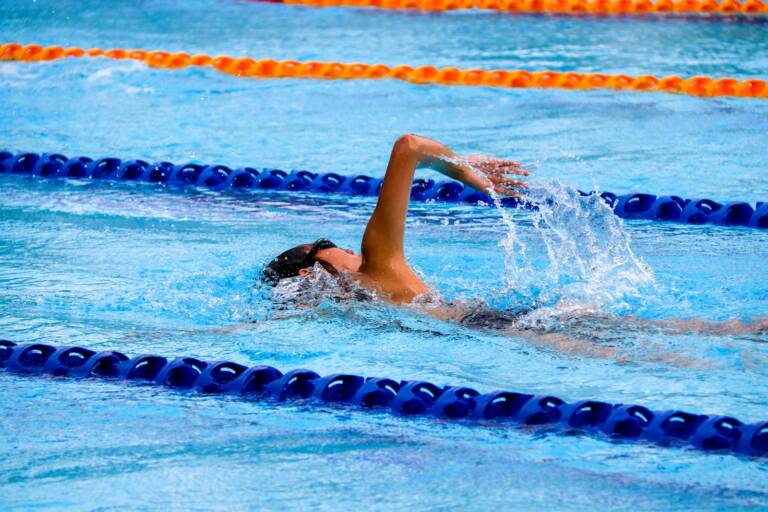
Choose manageable amounts of comfortable movement: walking, easy cycling, swimming or relaxed sessions in your own sport. Keep effort low enough to hold a comfortable conversation, and avoid replacing intensity with hours of extra volume.
Use the time to review persistent symptoms, restore a workable sleep routine and identify what needs attention before the next build.
How long this easier phase lasts should depend on your season and recovery. It is not a compulsory four-week prescription.
Month two prioritises the work you keep postponing
This is where focused strength, movement control and appropriate rehabilitation can have room in the diary.
That might include calf strength for a runner, shoulder capacity for a swimmer, or a progressive programme for an existing tendon problem. The exercises should fit the demands of your sport and your own assessment.
Prehab describes work intended to improve readiness and reduce injury risk. Rehab addresses an existing problem. Neither is a guarantee against injury, and rehabilitation may need to continue beyond this block.
Strength training has reduced sports injuries in research, but a major review involved participants aged 12 to 40. Its findings support strength work in the wider sporting population; they do not establish an exact benefit for older masters athletes.[4]
A lower-pressure season does not mean every strength exercise must stay light. Appropriate progression may be part of rebuilding. Keep the overall programme manageable and adapt it to your response.
Month three builds towards the next training block
Gradually bring back more sport-specific work as your recovery and symptoms allow.
Avoid trying to restore distance, speed, heavy lifting and competition all at once. Leave space to see how you respond to each meaningful change.
Useful questions include: Am I recovering between sessions? Are symptoms stable or improving? Does the next increase fit my current capacity?
The calendar gives you a framework. It does not decide when an injury is ready.
Your head needs a break from competition too
The pressure to perform can continue long after a session finishes. Results, rankings and the next event can occupy the space that was meant for recovery.
A study of 22 masters sailors found higher self-reported mental and physical fatigue after a championship, alongside increased stress and reduced recovery. It was a small, sport-specific study, so it cannot tell us the ideal length of an off-season. It does reinforce the value of paying attention to mental fatigue as well as sore muscles.[5]
For part of the year, consider moving without a finishing-time target, choosing a different activity or leaving some sessions unmeasured. Give yourself room to enjoy sport without constantly testing yourself.
Build the next season around the events that matter
Start with your priority competitions and work backwards. Allow time for progressive preparation, then protect space after the demanding parts of the season for recovery and rebuilding.
Adjust the plan when work, sleep or family demands change. Training sits inside the rest of your life.
If pain keeps returning, changes how you move or comes with repeated swelling, seek an assessment rather than repeatedly resting and restarting the same programme.
At Joint Pain Freedom, we want people to feel informed and confident about staying active. If joint pain is affecting your training, explore our education resources and speak with a physiotherapist or sports medicine clinician about a plan that fits your goals.
Choose the events you want to perform at. Give yourself time to prepare for them. Put the rebuilding work in the diary before another competition takes its place.
Frequently asked questions
Does periodisation prevent injuries in masters athletes
It provides a structure for managing training and recovery, but it cannot guarantee injury prevention. Evidence does not establish one periodisation model as the best way to prevent injuries across all masters sports.
Should masters athletes stop training for three months
Not as a general rule. The example above combines an easier opening phase with continued activity and progressive rebuilding. Its duration and content should reflect the individual athlete.
Can masters athletes still train at high intensity
Yes. Age alone is not a reason to remove hard training. Its timing and dose should fit your health, fitness, sport and ability to recover. The aim is to make room for both demanding work and genuinely easier phases.
References and what they support
- Borges N, Reaburn P, Driller M, Argus C. Age-related changes in performance and recovery kinetics in masters athletes: A narrative review. Journal of Aging and Physical Activity. 2016;24(1):149–157. https://doi.org/10.1123/japa.2015-0021
Masters-specific review. Supports an individual approach and highlights limitations in recovery research. It does not prescribe a three-month off-season. - Fell J, Reaburn P, Harrison GJ. Altered perception and report of fatigue and recovery in veteran athletes. Journal of Sports Medicine and Physical Fitness. 2008;48(2):272–277. https://pubmed.ncbi.nlm.nih.gov/18427425/ Small cycling study of 18 participants. Supports considering perceived recovery alongside performance. It did not test injury prevention or seasonal periodisation.
- Soligard T, et al. How much is too much? (Part 1) International Olympic Committee consensus statement on load in sport and risk of injury. British Journal of Sports Medicine. 2016;50:1030–1041. https://doi.org/10.1136/bjsports-2016-096581 Broad sports consensus supporting individual load management and monitoring. Not a master’s-specific trial.
- Lauersen JB, Andersen TE, Andersen LB. Strength training as superior, dose-dependent and safe prevention of acute and overuse sports injuries: a systematic review, qualitative analysis and meta-analysis. British Journal of Sports Medicine. 2018;52:1557–1563. https://doi.org/10.1136/bjsports-2018-099078 Six studies with 7,738 participants aged 12–40. Supports strength-based injury prevention in studied populations, not a specific effect size for older masters athletes.
- McIntosh SL, Bruce LM, Broadbent DP. Perceived mental and physical fatigue, stress and recovery, and workload in masters athletes pre- and post-sailing competition. European Journal of Sport Science. 2026;26(1):e70082. First published online 20 December 2025. https://doi.org/10.1002/ejsc.70082 Study of 22 masters sailors using self-report measures. Supports considering mental and physical fatigue together. It did not test recovery-block duration or injury outcomes.
Related guides
Gym and strength training



Compression support
Cryo compression therapy
Joint injections
More from the community

How To Prepare For Hiking When You Have Knee Pain, Arthritis Or Joint Stiffness

Steroid vs. Hyaluronic Acid and Why Cingal is a Game-Changer for Dr Mehrdad Bordbar