Cingal – Chondroprotective

Cingal – Chondroprotective

Steroid injections have a place in managing joint pain. How, when, and where always generates great debate.

A very interesting scientific paper by Bauer et al looks at the ‘increased chondroprotective effect of combining HA with a steroid…’ and adds further discussion to that debate.


Cingal consists of Triamcinolone Hexacetonide, a ‘kinder’ yet potent steroid that is held in suspension with Hyaluronic Acid. Much more than a simple mixture. This gives a safe and consistent delivery that complies with medical device regulations.

Practical benefits for a patient include:
💉 One injection
🏨 One visit
💷 One standard cost
📈 92% response rate – 26 weeks
📉 72% pain reduction – 26 weeks

Increased Chondroprotective Effect of Combining Hyaluronic Acid with a Glucocorticoid Compared to Separate Administration on Cytokine-Treated Osteoarthritic Chondrocytes in a 2D Culture

Abstract;

Intra-articular injections of glucocorticoids (GC) or hyaluronic acid (HA) are commonly used interventions for patients suffering from knee osteoarthritis (OA). Both substances are combined to achieve a chondroprotective and anti-inflammatory effect. Clinical studies have shown benefits, but data on the cellular level are still lacking. This study aimed to investigate the effect of the GC triamcinolone hexacetonide, HA, and a mix of both substances on cytokine-treated chondrocytes in vitro. Chondrocytes isolated from human articular cartilage were seeded on 6- and 24-well plates. Mimicking OA’s inflammatory state, cells were treated with IL-1β and IL-17 for six days, whereby, after three days, test substances (10%) were added to the culture medium. Chondrocytes were analyzed on days three and six concerning their actin polymerization, expression of anabolic and catabolic genes, metabolic activity, cytokine release, and reactive oxygen species (ROS). Adding HA or GC/HA to the inflammatory culture medium increased the metabolic activity of chondrocytes, while groups containing GC reduced catabolic gene expression and the release of TNF-α. In addition, enhanced F-actin content was shown supplementing HA or GC/HA to the culture medium. Supplementing GC with HA leads to an anti-inflammatory and chondroprotective effect by diminishing the side effects of GC supplementation alone.

Full paper

Cingal for Knee Pain

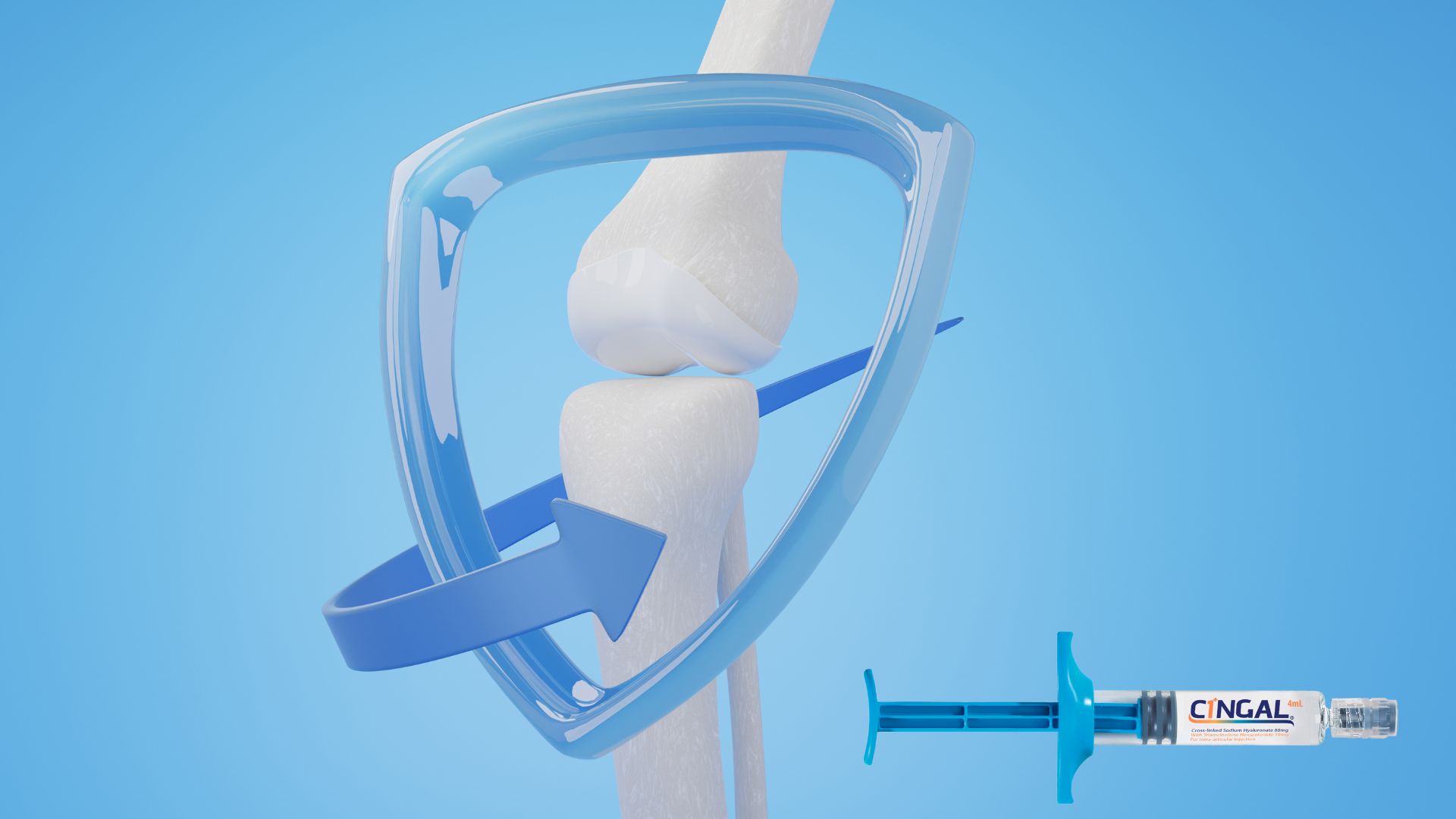
Cingal offers patients with knee arthritis pain relief within 24-48 hours of receiving the injection.  The above paper scientifically demonstrates that the positive effects of rapid pain relief from the steroid are not diminished, but the potentially harmful effects associated with steroid injections on the chondral surface are.  

Cingal manages pain with rapid effect while maintaining the chondroprotective properties of a normal Hyaluronic Acid. 

Find out more

Cingal

#ActiveFreedom

Community @ Eos Active

Continue reading

Cingal medical device

Cingal® – A Medical Device

Cingal is a next-generation, unique pain management injection therapy, that is classified the same as a Hyaluronic Acid injection, a medical device.   Therefore Cingal does not require a prescription although contains a potent, yet gentler-acting steroidal component to its makeup. 

So, what’s the deal, why a medical device, what is CINGAL®?

Cingal ® is a combination of Monovisc (the worlds mot injected HA for joint pain) and Traimcinolone Hexacetinide (TH).  To understand Cingal is to understand TH. 


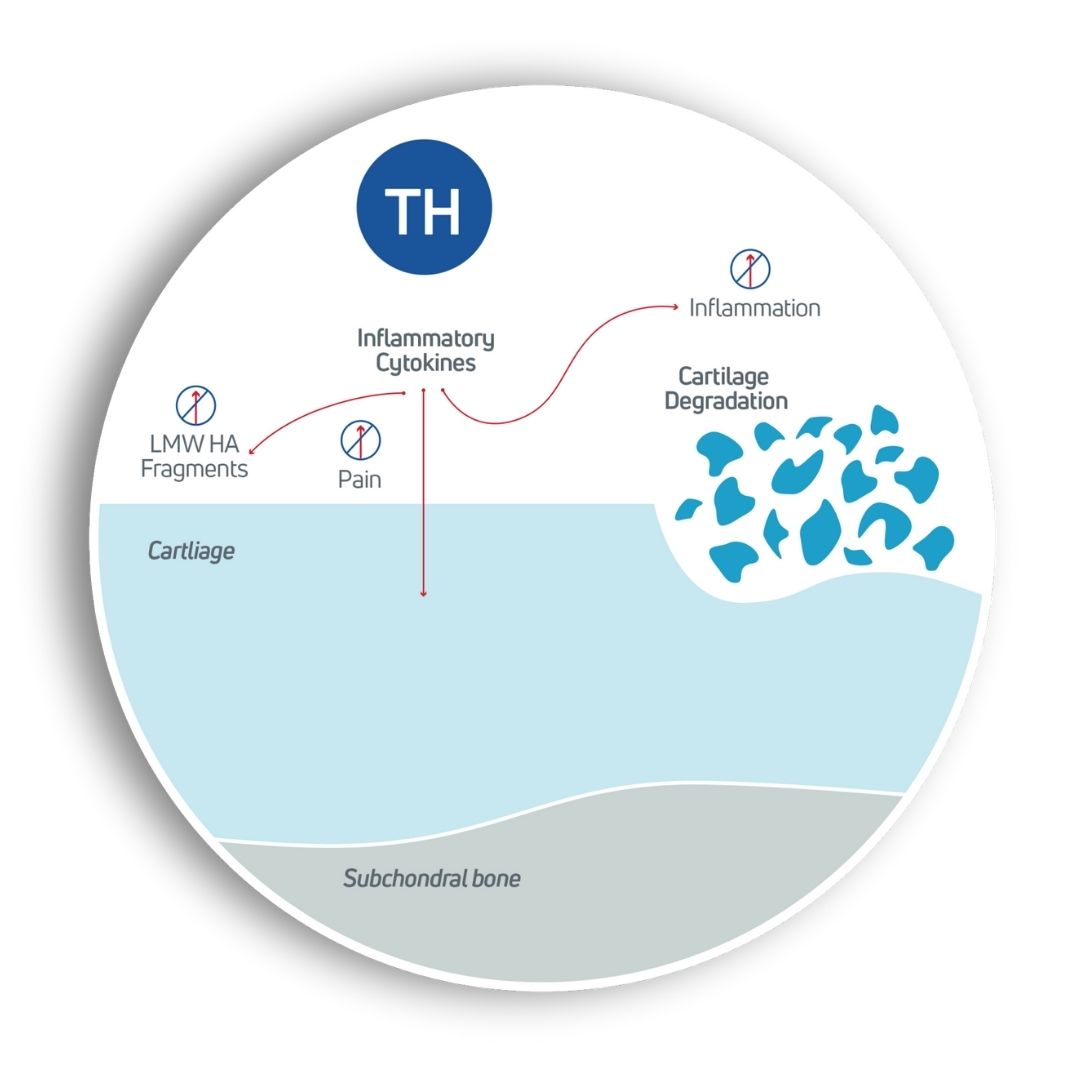
TH is a slower-release steroid but works incredibly well to control inflammation and pain in the Osteoarthritic Joint.

  • Fast pain relief, generally beginning 24 hours after administration
  • Approximately 5X the potency of hydrocortisone
  • TH maintains anti-inflammatory levels longer due to its slow release over time
  • Achieves low systemic levels of corticosteroid
  • Well tolerated, associated with fewer flare-ups than TA
  • A safe choice: Pediatric Indication

TH is active for 10-14 days


Reducing inflammation to allow HA to work most effectively is backed by strong science, and mixing these two comments is commonly accepted as standard practice for a painful, inflamed OA knee. 

We know from endogenous HA production and the OA cycle, that inflammation weakens HA.  So to improve the performance of injected HA, it makes sense to manage the inflammation simultaneously.

The issue is, that steroid doses tend to be higher than is needed (40mg Triamcinolone Acetonide or even double this) and add the further complication that it does not mix with well HA. They separate and do not disperse into the joint evenly.

Steroid and HA do not naturally mix

How Corticosteroids works within the joint

They have an anti-inflammatory and immunosuppressive effect.

Decrease the local inflammatory modulator response by switching off multiple inflammatory genes by

1) Interfering with inflammatory cell adhesion

2) Interrupting cytokines (like IL-1)

3) impairing leukotriene and prostaglandin synthesis

The effect of cortisone with knee intra-articular injections

↑ vasoconstriction leads to ↓erythema, swelling, heat, tenderness, and pain.

↑ relative viscosity & HA concentration, leading to increased mobility. Lower doses (12-18mgs for TH) actually show a possible protective effect on chondral tissue.

Medical Device Classification and Guidance 

Cingal®.  TH + Monovisc in a single injection as a medical device.

It does not require a prescription. Cingal is the safest way to combine steroid with HA.  The TH and HA are micronised, ensuring it is part of the overall injection with no separation. TH is also a slower absorbing steroid meaning it produces a powerful anti-inflammatory effect that continues to work at the more optimum level for longer,  with a gentler action when compared to TA or other corticosteroids commonly used.

18mg of a slower release, kinder steroid component, combined with 88mg of Hyaluronic Acid, manufactured as a singular product into a syringe that is designed ergonomically, is a very different option to 40mg Ostenil Plus + 40mg TA/Kenelog mixed in a clinic 

Hence the medical device regulations deaming Cingal a medical device.

Highlighted in the factsheet for healthcare professionals and health institutions;

‘In-house devices –

The Regulations allow health institutions under certain conditions to manufacture, modify, and use devices ‘on a non-industrial scale’ when equivalent ones are not available commercially……

Full MDR factsheet

CINGAL is a MEDICAL DEVICE.

PROVEN with unmatched clinical data across three Phase III clinical trials. FASTER acting with 59% pain reduction in week 1. LONGER lasting with 72% pain reduction at 26 weeks. CONSISTENT pain reduction results with a 92% responder rate at 26 weeks

Community @ Eos Active

#ActiveFreedom

Continue reading