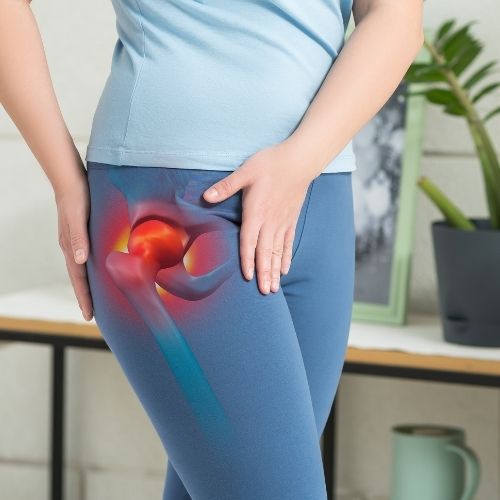

Hip Osteoarthritis
Understanding Hip joint pain, stiffness, and what to do next
Hip Osteoarthritis
Understanding Hip joint pain, stiffness, and what to do next
What’s happening in the Hip Joint?
Hip arthritis, most commonly osteoarthritis, develops when the smooth cartilage lining the hip joint gradually wears down. Over time, this can lead to stiffness, pain and reduced movement in the joint.
Hip osteoarthritis often develops slowly. Many people first notice a dull ache around the groin or thigh, stiffness when moving after rest, or discomfort when walking longer distances.
The aim of treatment is usually simple:
reduce pain, maintain movement, and help you stay active for as long as possible.

The Hip
The hip is a deep ball-and-socket joint designed to carry body weight and allow smooth movement during walking, sitting and rotation. When the cartilage surface becomes damaged, the joint can become irritated and inflamed, leading to symptoms that gradually affect everyday activities.
Common symptoms patients describe:
Hip osteoarthritis can affect people in different ways, but there are some common patterns.
Many people notice:
- Pain deep in the groin or front of the hip
- Pain spreading to the thigh, buttock or sometimes the knee
- Stiffness when getting up after sitting or in the morning
- Difficulty putting on shoes and socks
- Pain walking longer distances or climbing stairs
- Reduced movement in the hip joint
Groin pain is particularly common in hip arthritis and can worsen during movement or weight-bearing activities such as walking or standing for long periods.
As symptoms progress, the distance someone can comfortably walk may gradually reduce.
Why Hip Osteoarthritis Develops
Hip osteoarthritis usually develops from a combination of factors rather than a single cause.
These may include:
Age-related cartilage wear
The smooth cartilage lining the joint slowly becomes thinner over time.

Previous injury
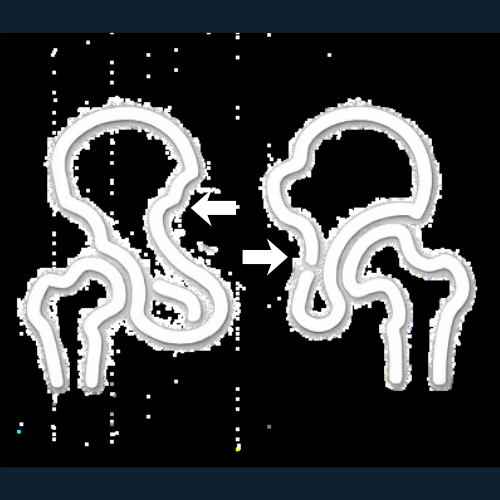
Joint shape and mechanics

Activity and load

Muscle weakness or movement patterns

Poor blood supply to the ‘ball’ of the joint

How treatment options are usually considered
Treatment for hip osteoarthritis usually begins with simple conservative approaches as the disease tends to develop gradually.
These aim to reduce joint irritation while maintaining movement and strength.
Movement and strengthening
Strength around the gluteal muscles, hip stabilisers and core can help the joint feel more supported and improve how load moves through the hip during walking and daily activity. Maintaining mobility and strength also often helps.

Weight management and load modification
Small changes in load, footwear, pacing and training volume can make the joint more manageable without needing to stop being active, but of course, controlling weight is a key factor in general.
Physiotherapy
A good physio looks at the whole picture: strength, balance, swelling, walking pattern, confidence and function and a program should support the movement and weight management goals.

Pain medication
Short-term medication may be recommended by a healthcare provider to control symptom flares. Although long-term oral options like Nsaids can have other negative health effects.

Injection discussions

Surgery when needed
Hip replacement surgery is a very successful procedure. Certain groups of patients who experience pain that is significantly affecting sleep, walking or quality of life, and options like injections are no longer working beyond 4-6 months at a time, may start to consider hip replacement.
All of these options are offered and available with care in the NHS. But sometimes a more specific type of treatment is possible with private healthcare. Hyaluronic Acid injections, for example, are available in a few NHS hospitals, but most patients pay for this treatment.
To review multiple options that may help ease pain and help you continue an active life, take a look at our treatments page.
Support for Patients Living With Hip Arthritis
Hip osteoarthritis can affect daily activities such as walking, sitting, driving or exercise.
Understanding the condition and knowing the available treatment options can make it easier to manage symptoms and make informed decisions about care.
Joint Pain Freedom provides information about:
- osteoarthritis and joint health
- treatment options such as injections
- supportive measures including bracing, cold therapy and rehabilitation
- clinics experienced in treating joint pain
If hip pain is affecting your mobility or quality of life, speaking with a qualified musculoskeletal clinician is the best place to start.
Why a joined-up plan matters
NICE recommends exercise as a core treatment for osteoarthritis and notes that imaging is not needed for every patient. Hip symptoms cans somties overlap with various other health issues so it’s always best to seek proffesional advice.
Additional Resources
If you would like to learn more about hip osteoarthritis and treatment options, the following organisations provide useful information:
- NHS Inform – Hip Osteoarthritis https://www.nhsinform.scot
- Versus Arthritis – Osteoarthritis https://www.versusarthritis.org
- British Orthopaedic Association – Joint Health Information https://www.boa.ac.uk
- Arthritis Research UK Educational Resources
These resources provide further information on symptoms, diagnosis and treatment approaches for people living with osteoarthritis.
The information on this page has been developed using guidance from recognised musculoskeletal organisations and published clinical research on osteoarthritis and hip joint health.
Key sources reviewed when preparing this information include:
- National Institute for Health and Care Excellence (NICE) – Osteoarthritis: care and management guidelines
- NHS Inform – Hip Osteoarthritis: symptoms, diagnosis and treatment guidance
- Versus Arthritis – Patient education resources on osteoarthritis and joint health
- British Orthopaedic Association – Educational material relating to osteoarthritis and joint conditions
- Pogliacomi F. et al. When is viscosupplementation indicated in hip osteoarthritis? Orthopedic Reviews
- Bannuru RR et al. Intra-articular therapies for osteoarthritis: systematic review and network meta-analysis
What to do next.
Read more about some options on our ‘Start Moving More’ page, that covers many further resources. We can also recommend one of the Joint Pain Freedom Centres of Excellence, which are proven to deliver excellent care with injection therapies and can talk you through the options. Use the form below, and we can support you.
You may have already been researching joint injections, you can read more about the recommended options: Cingal, Monovisc and Orthovisc. For Hip pain, Monovisc is best suited.
You can also visit our e-shop, offering more information with free treatment downloads and other therapeutic options to order.

Monovisc
Promotes lubrication and cushioning, used by clinicians to help manage osteoarthritis-related joint pain in the knee, hip, ankle and shoulder, over 3 million times.
Faq’s about Knee Arthritis
No. Hip pain can have several causes including muscle strain, tendon irritation, bursitis or problems within the hip joint itself. Osteoarthritis is one of the most common causes, particularly when pain develops gradually with stiffness and reduced movement.
A proper assessment by a physiotherapist, sports doctor or orthopaedic specialist can help identify the cause.
Most people with hip osteoarthritis feel pain deep in the groin or front of the hip.
However, the pain can also spread to the:
- thigh
- buttock
- outer hip
And even sometimes, the knee, because nerves around the hip travel down the leg, hip arthritis is sometimes mistaken for knee pain.
Pain from knee arthritis is often felt around the front or inside of the knee joint, although it can vary.
Some people experience:
- pain behind the kneecap
- discomfort along the inner side of the knee
- aching around the whole joint after activity
Because the knee carries body weight during walking and movement, pain may worsen after standing, walking longer distances or using stairs.
Not necessarily.
Many people live with mild or moderate hip osteoarthritis for years with manageable symptoms. Exercise, strengthening and maintaining joint movement often play an important role in slowing progression and controlling pain.
The goal of treatment is usually to keep people active and mobile for as long as possible.
Yes. Exercise is one of the most important parts of managing hip osteoarthritis.
Strengthening the muscles around the hip can:
- improve joint stability
- reduce pressure within the joint
- improve walking and balance
A physiotherapist can usually guide safe exercises based on the stage of arthritis and the level of pain.
Injection therapy may be considered when:
- hip pain continues despite physiotherapy
- symptoms are limiting walking or activity
- flare-ups of joint inflammation occur
Injections are usually delivered using ultrasound guidance to ensure accurate placement into the joint. Different injection types are available and should be discussed with a clinician experienced in musculoskeletal care.
Hyaluronic acid injections aim to improve lubrication inside the joint and support smoother movement.
Clinical studies suggest they may help reduce pain and improve function in some patients with hip osteoarthritis, particularly in early to moderate stages of the condition.
Results can vary between individuals, so treatment decisions should always be made with a clinician who understands your specific symptoms.
No injection cures osteoarthritis.
However, injections may help reduce pain, calm inflammation, and improve movement, allowing people to stay active and continue with rehabilitation.
For many patients, they form part of a broader treatment plan that includes physiotherapy, strengthening and lifestyle adjustments.