
Knee Osteoarthritis

Understanding knee joint pain, stiffness, and what to do next

This page is here to help you understand symptoms, why the joint may be painful, and learn how treatment options are usually considered in real life.

Knee Osteoarthritis

Understanding knee joint pain, stiffness, and what to do next

What’s happening in the Knee Joint?

The knee is one of the most commonly affected joints in osteoarthritis. Because it carries load every day, even small changes in the cartilage, lining of the joint, meniscus or overall mechanics can start to matter. The aim of this page is simple: help you understand what may be happening, what usually helps, and when it is worth exploring treatment options with a clinician.

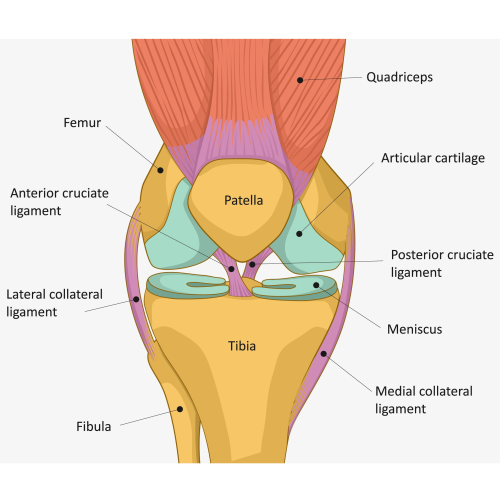
knee dia

The Knee

It’s a complex joint, and you don’t need to understand everything about how it works, but it is good to know that the smooth surface called cartilage plays an important role during load and movement, working with the meniscus on the other side, which helps to distribute weight across the joint. Both these structures are affected in arthritis.  

Common symptoms patients describe:

  • Pain during walking, stairs or getting up from a chair.
  • Stiffness after rest, especially first thing or after sitting.
  • Swelling or a feeling of fullness in the joint.
  • Clicking, grinding or reduced confidence on the knee.
  • Loss of range, particularly bending fully or squatting.

Why the joint can become painful

Knee osteoarthritis often reflects a combination of load and biology. Age-related cartilage change can play a part, but previous meniscal injury, ligament problems, altered alignment, excess load, and reduced muscle support around the joint can all influence symptoms. In other words, the knee rarely exists in isolation.

There is more information on our gerneal Osteoarthritis page.

How diagnosis usually works

A clinician will usually diagnose knee osteoarthritis from your story and an examination. X-rays are sometimes used if the diagnosis is uncertain or to help with planning, but imaging is not always needed to begin sensible treatment. That matters, because people often have more pain than the scan suggests — or the other way round.

How treatment options are usually considered

34

Movement and strengthening

Therapeutic exercise is central to knee OA care. Strength around the quadriceps, hips and calf can help the knee feel more supported and more capable.
29

Weight management and load modification

Small changes in load, footwear, pacing and training volume can make the joint more manageable without needing to stop being active.
28

Physiotherapy

A good physio looks at the whole picture: strength, balance, swelling, walking pattern, confidence and function.
27

Bracing or support

Selected patients may benefit from compression, support or more specialist unloading strategies depending on the pattern of pain and instability.
25

Injection discussions

Some patients discuss injection options with their clinician when symptoms continue despite rehab and activity changes. Which option is appropriate depends on the joint, symptoms, goals, and local clinical practice.
33

Surgery when needed

For a smaller group of patients, surgical opinion becomes relevant, especially if pain is significantly affecting sleep, walking or quality of life and options like injections are no longer working beyond 4-6 months at a time.

All of these options are offered and available with care in the NHS. But sometimes a more specific type of treatment is possible with private healthcare. Hyaluronic Acid injections, for example, are available in a few NHS hospitals, but most patients pay for this treatment. 

To review multiple options that may help ease pain and help you continue an active life, take a look at our treatments page.

Clinical reasoning that helps make sense

Why a joined-up plan matters

NICE recommends exercise as a core treatment for osteoarthritis and notes that imaging is not needed for every patient. Knee symptoms also commonly overlap with meniscal change, alignment issues and deconditioning, so a joined-up assessment usually makes more sense than focusing on one scan finding alone.

Sensible next steps to consider

If knee pain is starting to affect day-to-day movement, the next step is not guessing; it is understanding your options properly. Learning as much as possible before seeing a specialist can be a good thing, as long as the information is sound.  Websites like this one, and others like Versus Arthritis and Arthritis UK, give trusted advice.

Your own research may include reading about physiotherapy, braces, and injection pathways, but the key is to seek specialist advice and not allow the joint to deteriorate further. 

This page is created for patients, but it is grounded in mainstream clinical guidance. It is designed to help people ask better questions, understand where they are in the pathway, and stay engaged with care rather than drifting from one isolated answer to the next. 

Resources used:

  • NHS guidance Clear patient-facing explanation of symptoms, diagnosis and support.
  • NICE NG226 Current UK management guidance for osteoarthritis, including exercise-first care.
  • Versus Arthritis Useful joint-specific patient resources for knee, hip, hand and foot/ankle symptoms.
  • NIAMS Consistent explanation of exercise, education and long-term management principles.

Important: this guide is educational and does not replace a clinical assessment. Persistent swelling, hot red joints, sudden severe pain, fever, significant injury, or unexplained night pain should be assessed promptly.

What to do next.

The link to further resources can be found further up this page but we also regularly recommend one of the Joint Pain Freedom Centres of Excellence, which are proven to deliver excellent care with injection therapies and can talk you through the options. Use the form, and we can support you.

You may have already been researching joint injections, you can read more about the recommended options Cingal, Monovisc and Orthovisc below.

You can also visit our e-shop, offering more information with free treatment downloads and other therapeutic options to order. 

Cingal

Cingal, A unique hybrid joint injection

A clinically designed combination of hyaluronic acid and a targeted, safer steroid, developed for quick and longer-lasting relief from osteoarthritis pain.

Monovisc

A long-acting hyaluronic acid injection

Promotes lubrication and cushioning, used by clinicians to help manage osteoarthritis-related joint pain in the knee, hip, ankle and shoulder, over 3 million times.

Orthovisc

A trusted hyaluronic acid injection for smaller joints

Helping to manage osteoarthritisrelated joint pain in smaller joints such as the toes, wrists and fingers, and even tendons (tennis elbow)

Faq’s about Knee Arthritis

What is knee arthritis

Knee arthritis usually refers to knee osteoarthritis, a condition where the cartilage that covers the ends of the bones in the knee gradually wears down.

Cartilage normally allows the joint to move smoothly and absorb load during walking and activity. As this cartilage becomes thinner, the joint can become stiff, irritated and painful.

Osteoarthritis is one of the most common causes of knee pain in adults and often develops slowly over time.

What are the early symptoms of knee arthritis?

Early symptoms of knee osteoarthritis can develop gradually and may vary between people.

Common early signs include:

  • stiffness in the knee, especially in the morning or after sitting
  • discomfort when walking longer distances
  • pain when climbing stairs or squatting
  • mild swelling around the joint
  • a feeling of grinding or reduced smooth movement in the knee

Symptoms often fluctuate, with periods where the knee feels relatively comfortable followed by flare-ups.

Where is knee arthritis pain usually felt?

Pain from knee arthritis is often felt around the front or inside of the knee joint, although it can vary.

Some people experience:

  • pain behind the kneecap
  • discomfort along the inner side of the knee
  • aching around the whole joint after activity

Because the knee carries body weight during walking and movement, pain may worsen after standing, walking longer distances or using stairs.

Can exercise help knee arthritis?

Yes. Exercise and strengthening are one of the most important parts of managing knee osteoarthritis.

Strengthening the muscles around the knee can help:

  • support the joint
  • reduce pressure on damaged cartilage
  • improve stability and walking ability
  • reduce pain during daily activity

Many people benefit from guidance from a physiotherapist or musculoskeletal specialist when starting an exercise programme.

What treatments are available for knee arthritis?

Treatment usually follows a step-by-step approach.

This may include:

  • physiotherapy and strengthening exercises
  • weight management and activity modification
  • short-term pain relief medications when needed
  • supportive treatments such as bracing or cold therapy
  • injection therapies for joint pain
  • surgical assessment in more advanced cases

The goal of treatment is usually to reduce pain and help people remain active for as long as possible.

When are knee injections considered for arthritis?

Injection therapies may be considered when knee pain continues despite physiotherapy and conservative treatments.

They are often used when:

  • pain is limiting walking or activity
  • symptoms flare due to inflammation inside the joint
  • patients want to delay or avoid surgery

Injections are normally delivered directly into the joint by clinicians experienced in musculoskeletal care.

What types of injections are used for knee arthritis?

Several types of injections may be used depending on the symptoms and stage of osteoarthritis.

Common options include:

  • corticosteroid injections to reduce joint inflammation
  • Hyaluronic acid injections to support joint lubrication
  • other regenerative or biologic treatments in specialist clinics
  • There are also newer gel type or polymer injections but these are still fairly new.

A clinician can help determine whether injection therapy is appropriate and which option may be most suitable.

Can hyaluronic acid injections help knee arthritis?

Hyaluronic acid occurs naturally within healthy joint fluid and helps the joint move smoothly.

In osteoarthritis the quality of this fluid can change. Hyaluronic acid injections aim to improve lubrication and cushioning within the joint.

Some patients experience improvements in pain and mobility following treatment, particularly when injections are combined with strengthening and rehabilitation.

Can knee arthritis be cured?

There is currently no cure for osteoarthritis, but many treatments can help manage symptoms effectively.

Most treatment plans aim to:

  • maintain joint movement
  • strengthen the muscles around the knee
  • reduce inflammation and pain
  • support activity and mobility

Many people live active lives with knee osteoarthritis when symptoms are managed appropriately.

Is there a best injection for knee arthritis?

Every patient is different, there is no one-size-fits-all approach and it will depend on the stage of arthritis

However, Cingal represents the highest chance of success across all options (92%)

Get in touch

Contact Form Demo (#4)