Big Toe Arthritis (Hallux Rigidus)
The big toe is essential to everyday movement and walking.
The big toe joint plays a major role in balance, walking and push-off, so when it becomes stiff, swollen or painful, everyday movement can start to feel awkward, limited and tiring. In medicine, this is often called hallux rigidus, which simply means a stiff arthritic big toe.
Quick Big Toe Summary
- Hallux = Big toe
- Rigidus = Stiff
- Hallux rigidus = Arthritis affecting the main joint at the base of the big toe
Arthritis in the big toe can cause pain, stiffness, swelling, shoe irritation and difficulty pushing off when walking, further affecting gait and creating a knock-on effect to other joints like the knee and hip. It may develop after injury or joint overload, but in many people, it simply develops over time without one clear reason.
Big Toe Arthritis
Big toe arthritis usually affects the first metatarsophalangeal joint, often shortened to the first MTP joint.
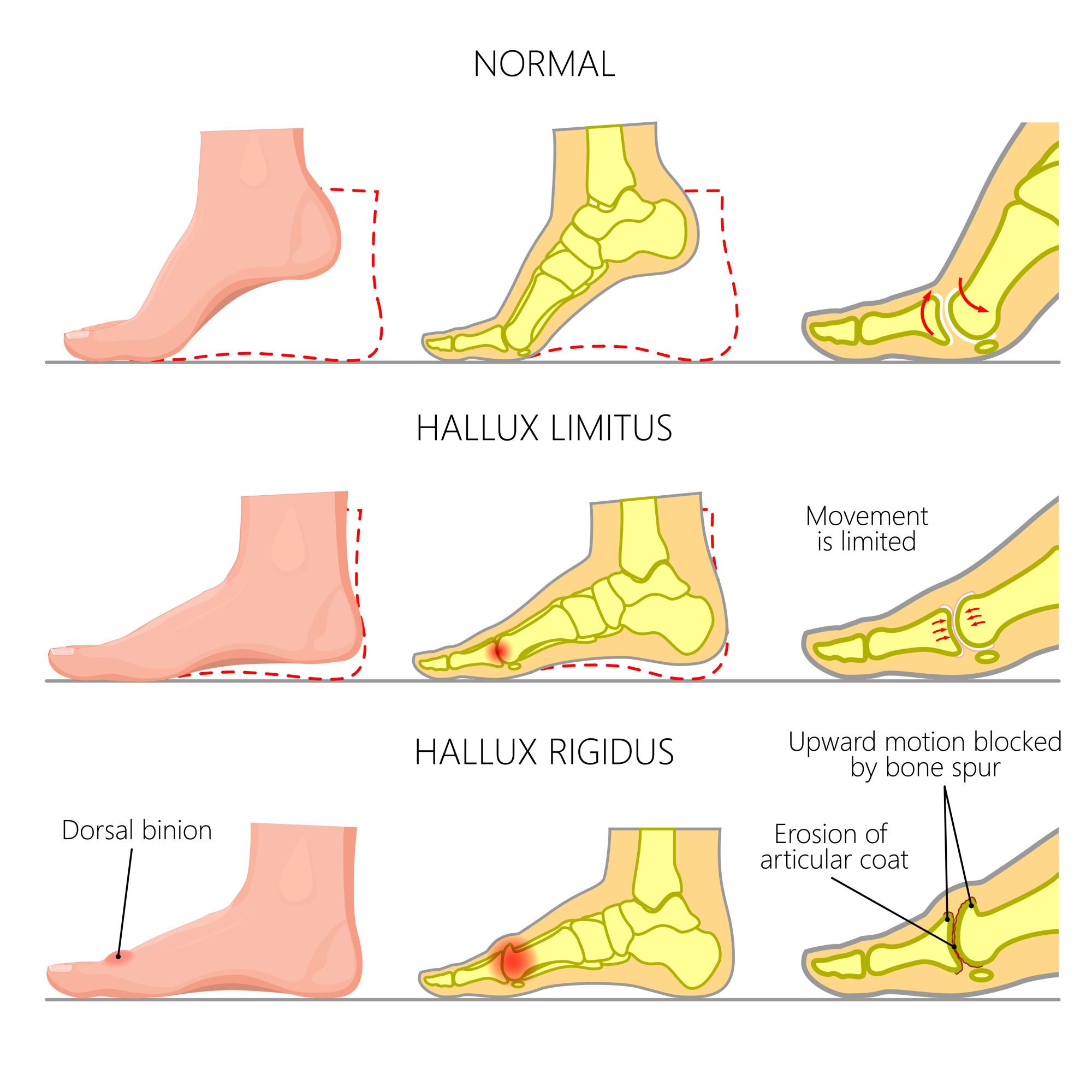
That is the joint where the big toe meets the foot. In a healthy joint, smooth cartilage helps the surfaces glide. In osteoarthritis, the surface becomes damaged, the joint can narrow, bone can thicken, and bone spurs may form around the top of the joint. Over time, movement becomes more limited, and the toe may become increasingly stiff and painful.
A related term you may also see is hallux limitus. This usually means the joint is becoming restricted but is not yet completely stiff. Hallux rigidus is generally used when the stiffness is more established and the arthritis is more advanced.
Why the big toe matters so much
This is the part patients often understand straight away. A healthy big toe is not just there to bend a bit. It helps the foot stay stable and helps you roll through the step and push off properly.
During walking, the first MTP joint takes substantial load, and loss of motion can alter gait, increase pressure elsewhere in the forefoot, and make walking feel unnatural.
That is why big toe arthritis can feel surprisingly disabling. People often notice:
- pain when walking faster or further
- discomfort going uphill or upstairs
- difficulty in flexible shoes
- a tendency to walk around the toe rather than through it
- pressure moving into the outside of the foot or the lesser toes
When the big toe stops doing its job properly, the whole foot often has to compensate.
How it tends to feel
For many people, it starts as an ache in the big toe joint, especially after a long walk, exercise, or certain shoes. Then it becomes more consistent.
The toe may swell, feel stiff first thing in the morning, or hurt when bending upward. You may notice a hard bump on the top of the joint that rubs on footwear. As it progresses, the pain often stops feeling like “just a sore toe” and starts affecting how confidently and comfortably you walk.
Common symptoms
- aching or sharp pain at the base of the big toe
- stiffness, especially when bending the toe upward
- swelling around the joint
- difficulty wearing certain shoes
- pain during walking, running, lunging or push-off
- a visible bump or bony prominence on top of the joint
- altered gait or overload into other parts of the foot
Typical Hallux Rigidus causes
For some people, big toe osteoarthritis is linked to a clear cause. For others, it seems to develop gradually over time.
Previous Injury
A past injury to the joint, including jamming injuries or repetitive stress, can change how the joint moves and may lead to arthritis later.

Shape and Joint Mechanics
Some people appear to have joint mechanics or anatomy that make the first MTP joint more prone to overload and stiffness.
Bone spurs and progressive loss of motion
As arthritis develops, spurs often form on the top of the joint. These can physically block movement and make bending the toe upward painful.
Inflammatory or crystal arthritis
Assessing and Managing Toe Arthritis
Clinical Assessment
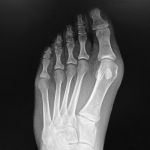
Assessment usually involves a good history, examination of the joint and walking pattern, and weight-bearing X-rays. These help show joint narrowing, bone spurs, alignment and how advanced the arthritis is. Advanced scans such as MRI are not always needed.
The scan is important, but so is the story. Treatment decisions are usually based on both the X-ray and how much the toe is affecting your life.
Sensible next steps to consider
Not everyone needs surgery. Many people improve for a period with the right conservative measures.
Common first-line options:
- Footwear changes
- A firmer sole or rocker-type sole can reduce painful motion through the joint and make walking easier.
- Activity modification
- High-load movements that force the toe upward can aggravate symptoms. Sometimes reducing those loads helps settle a flare.
- Orthoses or insoles
- These may help limit painful joint motion and improve comfort during walking.
- Pain relief and anti-inflammatory measures
- Topical or oral pain relief may be appropriate depending on the individual and the guidance of their clinician.
The aim early on is often not to force the joint to move more. It is to calm symptoms, reduce irritation and make walking more manageable.
Where injections fit for Hallux Rigidus
Injections can help some people, especially when symptoms are persisting despite footwear changes, activity modification and simple pain management. They do not reverse arthritis, but they may reduce pain and help someone delay or avoid surgery for a period.
The exact benefit depends on the stage of arthritis, the inflammatory component, and the type of injection used.
Corticosteroid injections
Steroid injections can be useful, especially for flare control, but they are usually seen as a short-term option rather than a long-term answer. Repeated steroid use is not something to drift into casually, particularly in a small, already-degenerated joint.
Hyaluronic acid (HA) injections
In the big toe joint, hyaluronic acid may suit some people who want a treatment aimed more at cushioning and joint mechanics than just short-term inflammation control, but results vary, and the supporting evidence is still developing.
To read more about Orthovisc, a proven, multiple molecular weight HA injection, you can visit the page on this website. Orthovisc has been used over 20 million times and is a very safe option. The balance and optimised nature of Orthovisc make it ideal for smaller joints.
Potential surgical interventions
In the right patients, surgery can be the right fit. It’s important to have an open-minded approach and take the advice of your healthcare proffesional. There are three key types of surgery that are perfomed for severe hallux ridges:
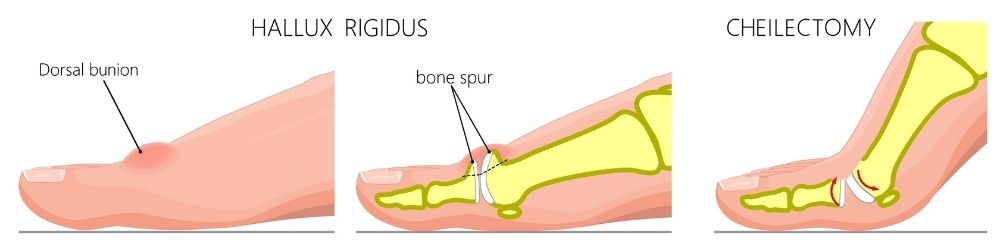
Big Toe Cheilectomy
A cheilectomy is a joint-preserving procedure used in earlier stages of big toe arthritis. The surgeon removes bone spurs and thickened tissue around the joint that block movement and cause pain when the toe bends upward. This can improve movement, reduce discomfort when walking, and help delay the need for more extensive surgery while keeping the natural joint.
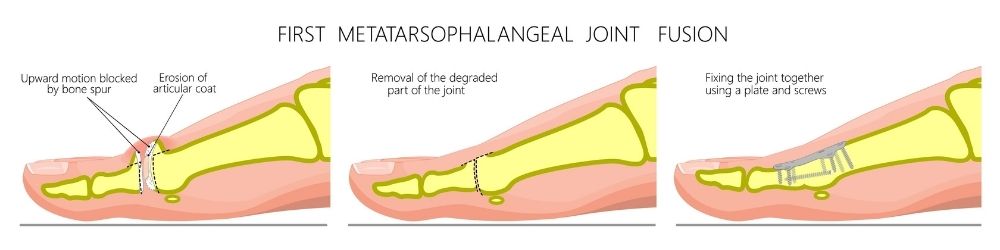
Big Toe Fusion
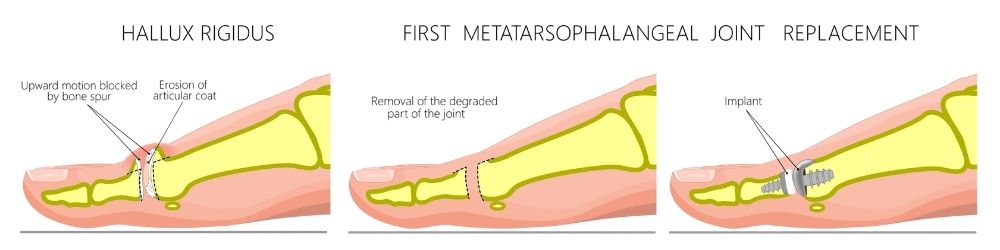
BIg Toe Replacement
Big Toe Arthritis FAQ’s
Hallux rigidus is arthritis affecting the main joint at the base of the big toe, causing pain, stiffness and loss of motion.
Clinical references and patient resources
Core sources used to inform this page
- NICE: Osteoarthritis in over 16s: diagnosis and management
- BOFAS Hyperbook: Hallux Rigidus
- Royal Orthopaedic Hospital NHS: Hallux Rigidus (Big Toe Arthritis)
- RNOH: Arthritis of the Big Toe (Hallux Rigidus)
- FootCareMD / AOFAS: Big Toe Arthritis, Cheilectomy, First MTP Fusion, First MTP Joint Replacement
- AAOS OrthoInfo: Hallux Rigidus (Stiff Big Toe)
- Review articles on hallux rigidus and first MTP injection evidence
Useful official or trusted further reading
- NICE osteoarthritis guidance
- NHS patient information pages on hallux rigidus
- BOFAS patient and professional resources
- FootCareMD patient education pages
This page is intended as general educational information and should not replace assessment by a qualified healthcare professional. Big toe pain is not always simple osteoarthritis. If symptoms are severe, rapidly worsening, hot, red, or associated with significant swelling or fever, medical assessment is important. Treatment decisions should always be made with your clinician, based on your symptoms, examination and imaging.