Hyaluronic Acid For Joint Pain

Hyaluronic Acid (HA) for Joint Pain & Osteoarthritis, allowing Joint Pain Freedom

A clear guide to hyaluronic acid (HA) for joint pain and osteoarthritis: what it is, how HA injections work, who they suit, benefits, risks, and what results to expect.

Hyaluronic Acid for Joint Pain

What it is, why it matters in osteoarthritis, and when injections can help

If you’ve been Googling “hyaluronic acid for joint pain”, you’re not alone. Hyaluronic acid (often shortened to HA) is a substance your body already makes, and it’s a key ingredient in synovial fluid, the slippery fluid inside joints that helps movement feel smoother and more comfortable. In osteoarthritis, the joint environment changes and natural HA often becomes less effective, which is one reason joints can start feeling stiff, sore, and a bit less trustworthy. This page explains HA in plain English, and where hyaluronic acid injections (sometimes called viscosupplementation) fit into a sensible treatment plan.

Why does HA matter in osteoarthritis?

Osteoarthritis isn’t just “worn cartilage”

It’s a whole-joint condition involving cartilage, bone, joint lining (synovium), inflammation, and mechanics. When a joint gets irritated, the synovial environment can change.


Two things commonly happen:
⇒ Natural HA breaks down faster (so it doesn’t lubricate/cushion as well)
The joint may produce less effective HA than it has been used to, changing the biology

That combination can feed into the familiar cycle: pain → moving less → joint gets stiffer/weaker → pain becomes easier to trigger.

This diagram shows how inflammation can reduce joint fluid quality (including natural HA), making pain and flare-ups easier to trigger.
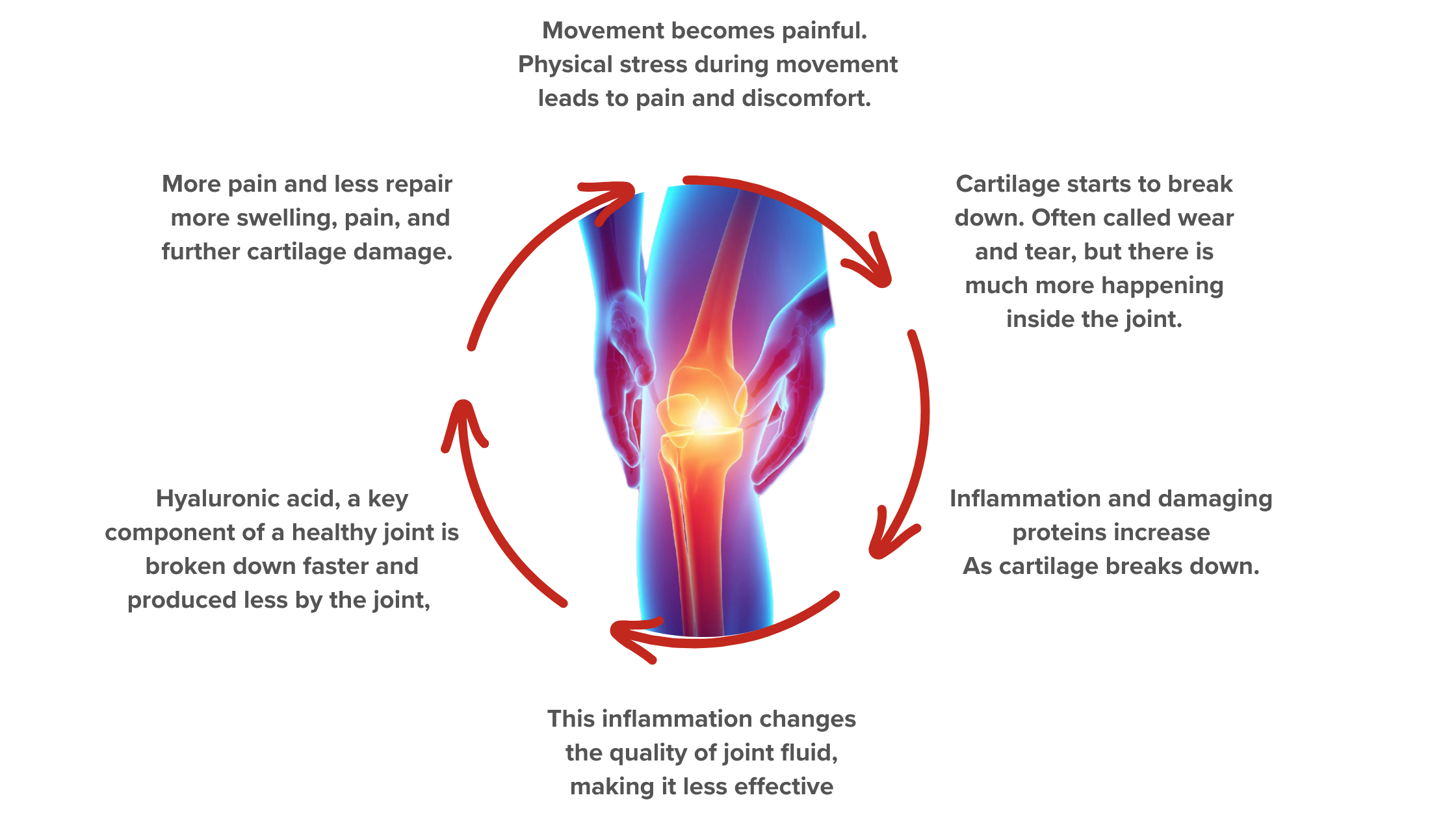
This painful cycle can be targeted to help ease pain, symptoms, and disease progression. HA injected into the joint can help with these things.

Important: Your scan stage and your pain level don’t always match. HA is about symptoms and function, not just what an X-ray says.

Hyaluronic Acid injections (viscosupplementation)

What are HA injections for joint pain?

Hyaluronic acid injections are a clinician-delivered treatment where HA is injected into a joint (most commonly the knee/hip/ankle/shoulder, depending on clinician experience and guidance). The aim is to improve the joint environment by supporting lubrication and cushioning, which can reduce pain and improve movement in the right patient. They’re not a cure for osteoarthritis, but they can be a useful lever, especially when pain is stopping you from progressing with rehab and activity. The right and optimised HA injection can also help to stimulate the joint’s own production of native hyaluronic acid, and this is where the stronger, longer-lasting effects can come from, when coupled with movement and physiotherapy. 

Who do HA injections tend to suit?

People who often do well are those with:

⇒ Osteoarthritis-related pain and stiffness that’s affecting day-to-day function

⇒ Symptoms that haven’t settled with simple measures alone

⇒ A goal of staying active and delaying the escalation of treatment

⇒ A joint that’s more “achy and stiff” than acutely inflamed and swollen (not a rule, but a common pattern)

A good clinician will factor in your symptoms, activity goals, joint, and overall picture, not just the wording on a scan report.

What results can you expect?

Most people are looking for:

⇒ Less pain and stiffness

⇒ Easier walking and stairs

⇒ Fewer flare-ups

⇒ More confidence in moving and exercising

HA injections can take around 4 weeks to feel the full benefit. With Cingal, it can be felt within the first week. Many aim for 6 months+ of meaningful benefit, sometimes longer, and the big win is what you can do during that window: build strength, improve movement patterns, and get back to consistent activity.

Hyaluronic acid vs steroid injections

People often ask what’s “better”, HA or steroid, but they’re really used for different goals. Most people are choosing between:

⇒ settling a reactive, inflamed flare (often where steroid is considered)

⇒ supporting smoother movement and joint comfort (often where HA is considered)

Steroid injections can feel quicker for some people when inflammation is driving symptoms. HA injections are often more about improving the joint environment over time so movement feels less irritated. It’s about your needs and symptoms, but often why Cingal, a combination of the two, is sensible option.

Getting the most from HA injections
HA injections tend to work best when they’re part of a bigger plan:

⇒ Physiotherapy and strength to improve joint support and load tolerance

⇒ Weight and nutrition basics (where relevant)

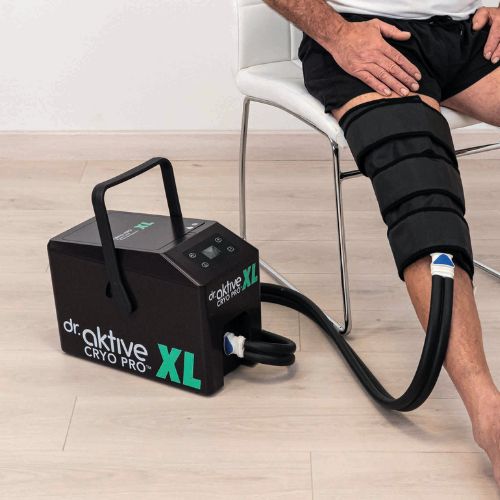
⇒ Flare management tools like cold/compression

A gradual return to activity that doesn’t spike symptoms

If you do one thing: use symptom improvement as a chance to rebuild capacity, that’s often where longer-term progress comes from.

Common questions

Does hyaluronic acid work for knee osteoarthritis?
It can help some people with knee OA reduce pain and improve function, particularly when used alongside rehab and movement.

Is hyaluronic acid the same as a derma filler?
Same family, totally different use, function and often molecule size – joint HA is about supporting synovial fluid function inside the joint.

Can I have HA injections if I’m very active?
Often that’s exactly the aim, keeping you moving. But suitability depends on your joints and symptoms. HA injection at an early stages are an excellent option for active patients though/

How do I know if it’s right for me?
A clinician’s assessment matters; the “right” option is the one that fits your symptoms, joints, and goals. With HA injection, the actual HA is very safe as it is a naturally occurring product within the body, so very well accepted. 

What your clinician will consider

Do your symptoms fit osteoarthritis joint pain?
The first step is making sure the pattern fits OA, rather than a different problem that needs a different plan.

Is the joint mainly stiff and achy, or hot and reactive?
That “feel” matters, because it can influence which injection option is most suitable.

Do the findings line up with the picture overall?
Imaging (often an X-ray) can help confirm osteoarthritis, but it shouldn’t be treated as the whole story on its own.

Will this help you move more and rehab better?
The best injections aren’t standalone fixes – they’re a tool to help you progress activity and rebuild capacity.

Does this treatment match your lifestyle goals?
An important consideration.  A good clinician will alwasy treat you, the patient.  Not the condition. Is this giving you what you want at this stage?

Hyaluronic Acid is an essential part of the human body and is essential for healthy joints that move well.

Learn more about the key injection therapy options available from many UK healthcare providers, who are part of the Joint Pain Freedom network. 

Cingal

Cingal, A unique hybrid joint injection

A clinically designed combination of hyaluronic acid and a targeted, safer steroid, developed for quick and longer-lasting relief from osteoarthritis pain

Clinically proven to last significantly longer than a steroid alone

Monovisc

A long-acting hyaluronic acid injection

Developed for larger joints to promote lubrication, cushioning, and the regeneration of the joint’s own HA

Used by clinicians to help manage osteoarthritis-related joint pain in the knee, hip, ankle and shoulder, over 3 million times.

Orthovisc

A trusted hyaluronic acid injection for smaller joints

Helping to manage osteoarthritisrelated joint pain in smaller joints such as the toes, wrists and fingers, and even tendons (tennis elbow)

Over 20 million injections have been used worldwide.

Free patient downloads, including the treatment leaflet and certain products for purcahse are available in our resources and shop area, alongside optional braces and supplements.

Find a trusted clinic near you

Contact Form Demo (#4)